
Employees we coach report major reductions in financial stress and improvements in job satisfaction.
Our personalized financial coaching empowers employees to maximize their compensation and benefits.
Over
2.5M
employees reached
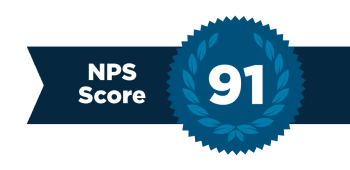
86%
of users report increased benefits satisfaction
54%
of users initially reporting high financial stress improve to low or no stress
72%
of users who report low credit scores go on to boost their score to at least 740
81%
of users with little/no emergency savings fully-funded their emergency savings account
We are trusted by over 20,000 employers around the world.





Financial wellness for everyone
Financial Coaching + Financial Technology
When passionate, experienced coaches come together with market-leading technology, remarkable transformations happen. We call it mass personalization and it is changing financial lives at scale.
Our coaches are and always will be at the core of what we do—while our technology amplifies their knowledge, expertise, and proven coaching strategies, driving meaningful change for millions.
Our Platform
No two financial journeys are alike, and people learn differently. Our integrated, multi-channel platform meets each employee where they are and propels them forward, delivering tangible outcomes for your workforce, organizational culture, and bottom line.
One place for employee wellness
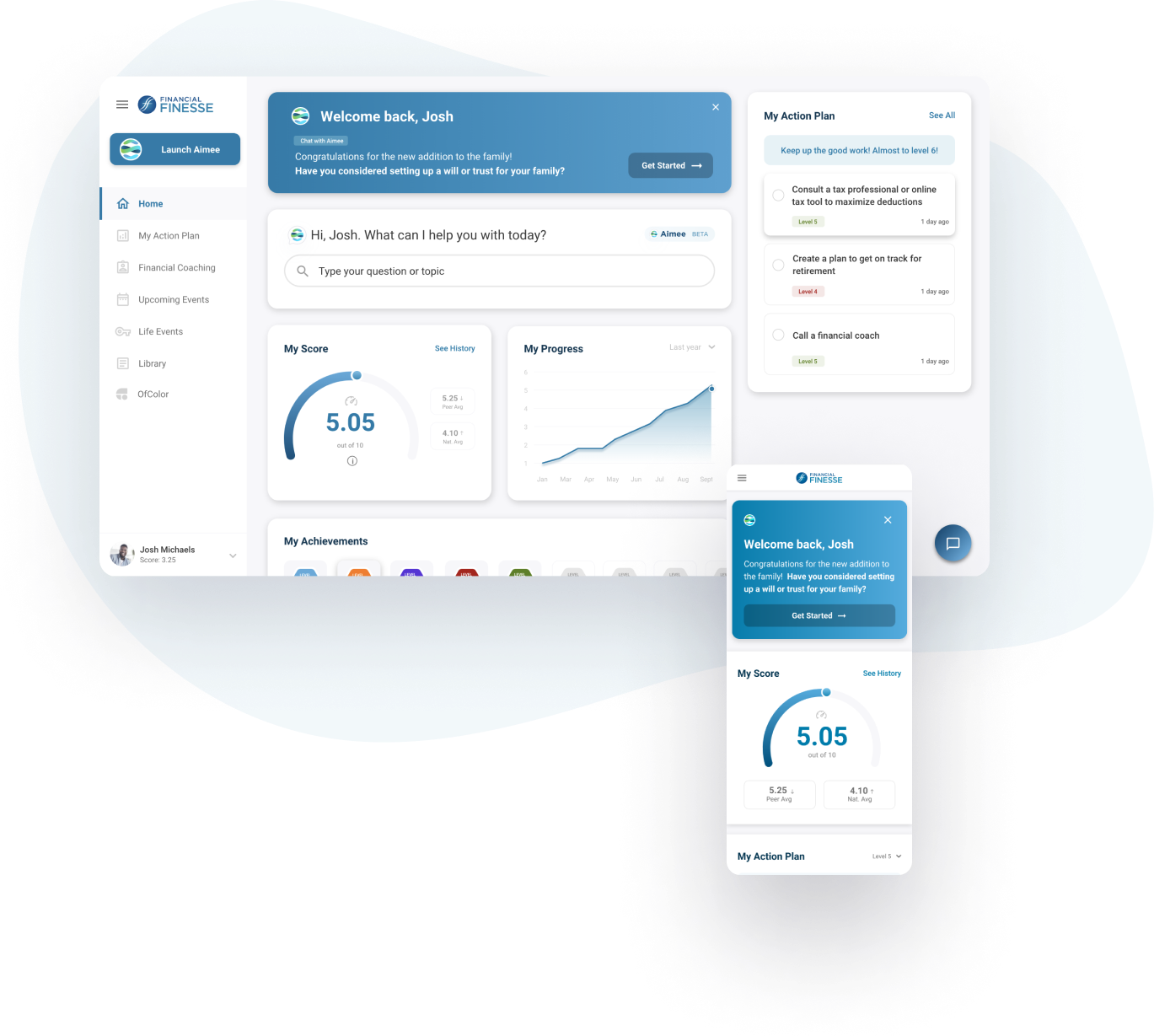
Personalized Financial Wellness Hub
An interactive homebase and learning center tailored to each employee’s unique financial journey and gamified to make taking critical steps forward feel simple and fun.
Includes:
- Access to live coaches and Aimee, our AI-powered virtual financial coach
- Full integration of employee benefits
- Interactive tools, calculators, and life event guides
Unlimited human connection
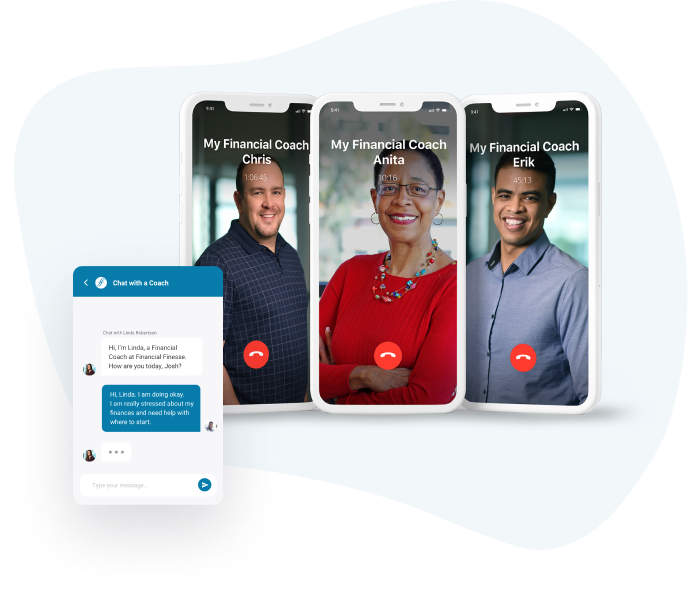
CFP® financial coaches, on-demand
Employees have unlimited access to experienced CFP® coaches who have intimate knowledge of their benefits and a passion for changing financial lives.
Includes:
- Dedicated employer coaching line
- Online chat
- Live workshops and webcasts
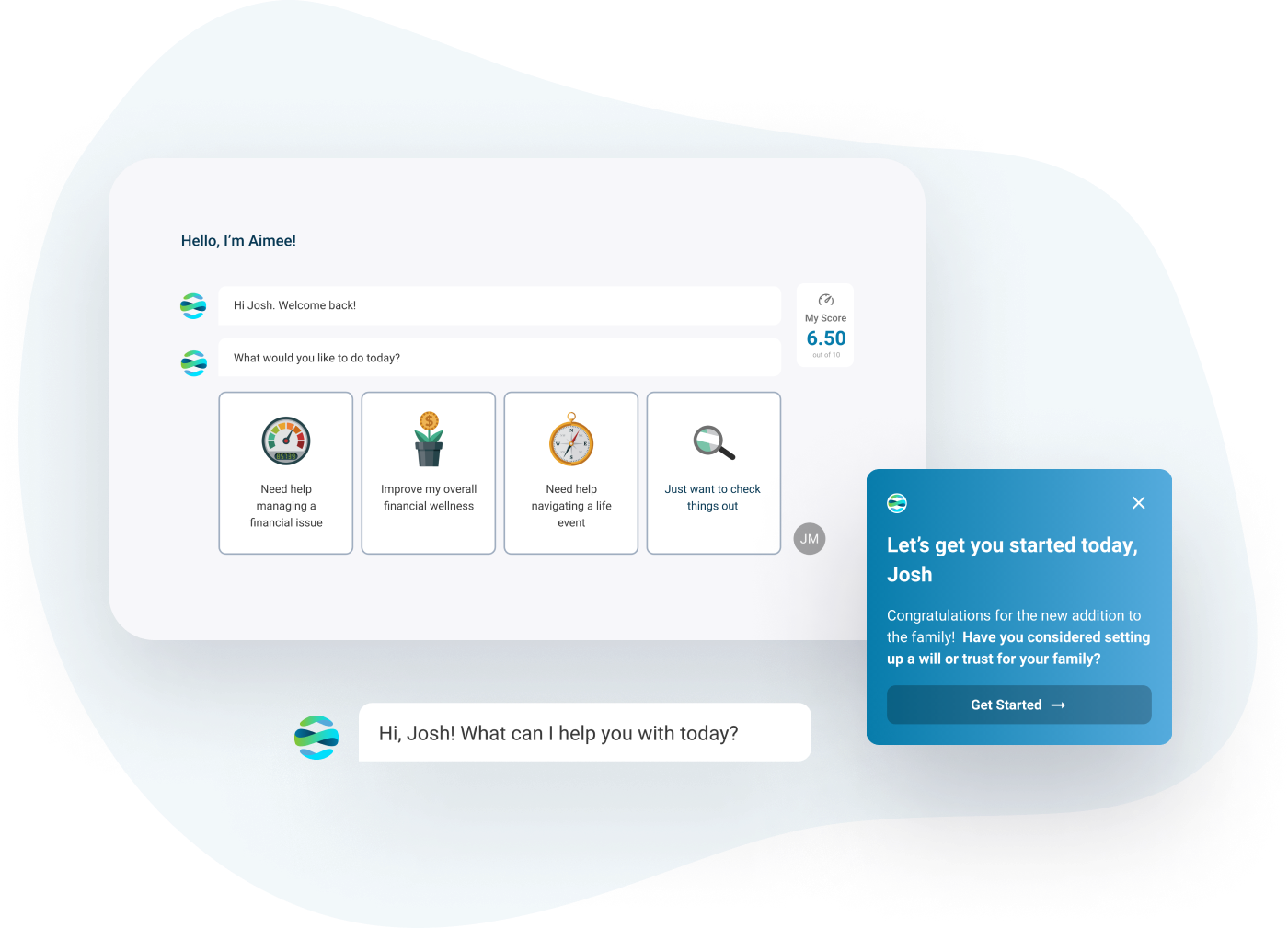
AI-powered coaching
Aimee, your employees’ virtual coach
The only AI-powered coach backed by research, behavioral science, and 25 years of live coaching experience.
Includes:
- Ongoing personalized coaching to help employees maximize both their compensation and benefits
- Dynamic Financial Wellness Score™ and Action Plan
- Instant answers to financial questions with AI-powered search
End-to-end support
From program design to results
We get to know your workforce, benefits, challenges, and objectives and build customized programs tailored to your employees’ unique needs.
Includes:
- Tailored program design
- Custom marketing
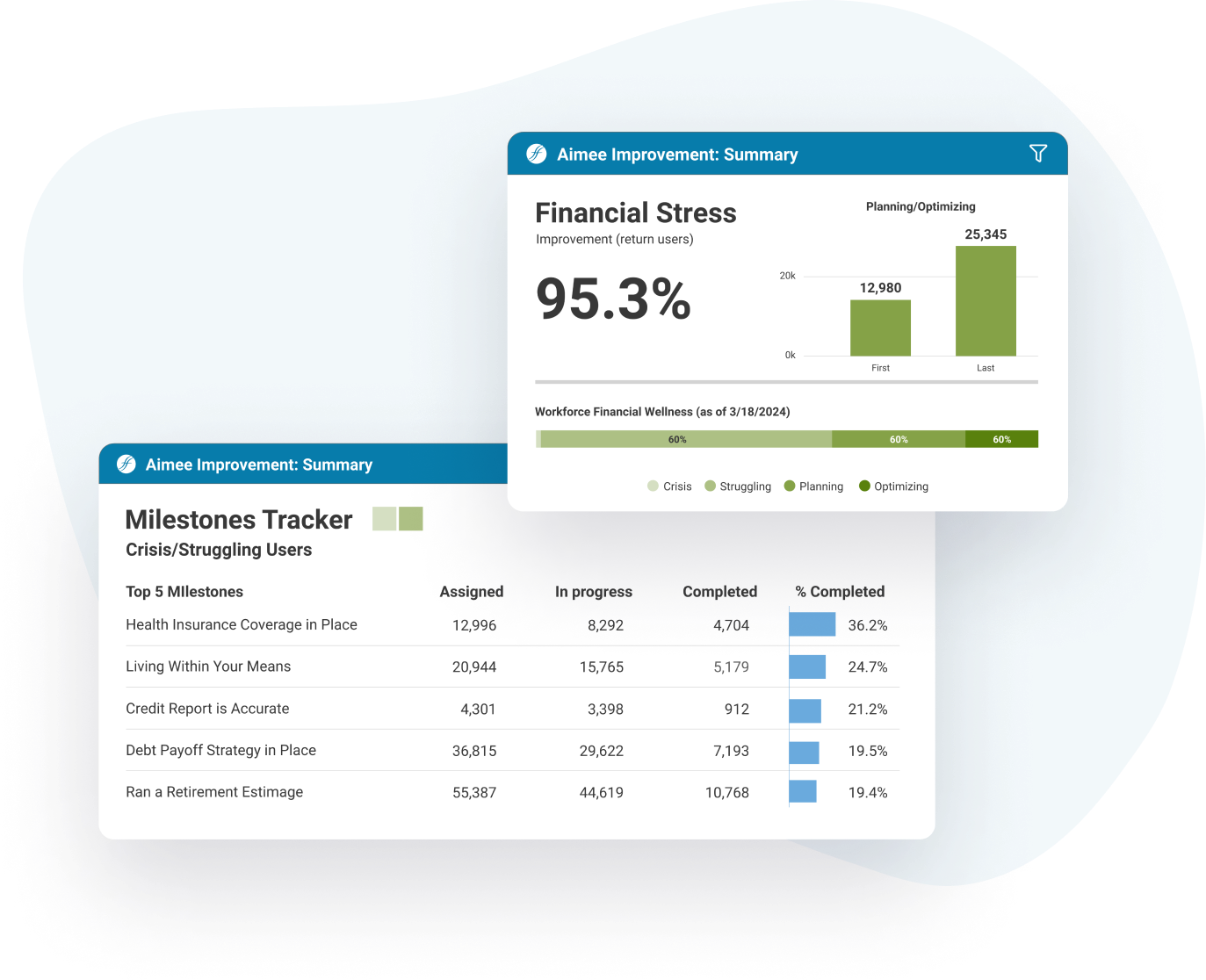
- Data and analytics and ROI analysis
- Ongoing consulting and optimization
We’ve got the world talking.

Financial Finesse
Founder and CEO, Liz Davidson, on AI
watch

2024 Winner: Best
Personal Finance
Platform
read
It’s Time to Prioritize Employees’ Financial
Health
Read

Financial Wellness is
Key to Good Mental & Emotional Wellbeing
Read

For EMPLOYEES
Do I have Financial Finesse?
Over 20,000 employers offer their employees unlimited access to our financial coaching solutions at no cost as an employee benefit. Enter your company email address to find out if your employer offers Financial Finesse, too.