How One Woman Survived The Government Shutdown Without Payday Loans

February 05, 2019

As the wife of a federal worker who actually got paid during the last shutdown, we developed a new appreciation for actually seeing a paycheck every two weeks. Unfortunately, this was not the case for a lot of my husbands’ friends and our neighbors. Since we live in the same area as a lot of federal government workers, it’s hard not to run into people who were impacted by the most recent government shutdown.

I asked one of my friends Kate, who was furloughed, how she handled the shutdown. She had said her ability to handle the financial impact came down to the financial planning she did before and during the shutdown, as well as her plans after she gets paid. Here’s how she did it.

Before the shutdown: planning

She had 3 months of expenses saved for emergencies

Kate has worked for the federal government for over 15 years. She said like many federal government employees, she initially saw her paychecks as guaranteed income, so she spent like her paychecks would never stop. The 16 day government shutdown in 2013 was her wake-up call. She realized that there are no guarantees to receiving pay and immediately started saving for emergencies.

She opened a savings account at a different bank (she wanted to remove the temptation to dip into it) and set up automatic payroll deposits into that account. She said having emergency savings made the shutdown an inconvenience instead of a financial hardship.

She created a crisis budget

After the first shutdown, Kate created a second budget she called a “crisis budget.” This budget eliminated any non-essential spending and drilled down to exactly how much she would need for the essentials like food, shelter and transportation. Kate said that knowing how much she needed to survive prevented her from panicking, because she knew exactly what to cut back and how long her savings would last.

She lived below her means

Throughout the years she tracked her spending monthly to ensure that she was living below her means. She used the budgeting software through her bank, but also researched other budgeting software programs like Mint.com. She said tracking her spending helped her to understand exactly where her money was going so she could stay on track with her financial goals.

During the shutdown: implementing

She contacted creditors immediately

Even though she had an emergency fund, Kate realized she had no idea how long the shutdown would last. As a safety measure, she contacted her creditors and informed them of her status. Luckily (depending on your perspective), all of her creditors were well aware of the government shutdown and offered to work with her if she got to a point where she could no longer pay her bills. She realized the more she communicated with her creditors, the more willing they were to work with her.

She immediately adjusted her lifestyle

She implemented the crisis budget and immediately adjusted her lifestyle to her new circumstance as soon as she was furloughed. Basically any expense that did not involve the essentials such as food, shelter and transportation came to a halt.

After the shutdown: recovering

She’s resisting the urge to splurge

Interestingly, Kate pointed out that how you handle finances immediately after a crisis is important. She shared that the temptation for her is to immediately go back to her prior spending, but doing that will prevent her from rebuilding her emergency savings. She plans to stick to her crisis budget until her emergency savings is rebuilt. She said she also encouraged her fellow co-workers to keep their spending to a minimum until any debt accrued is paid off and their emergency savings is rebuilt.

Surviving the ‘stress test’

Overall she said she used the last shutdown to “stress test” her financial stability and worked on improving her finances. That decision 5 years ago helped to make this shutdown a minor blip on her finances rather than a life-altering crisis. Her overall guidance to anyone is that no one’s financial situation is guaranteed, so we all must plan for unforeseen circumstances by:

Do Your Financial Habits Feel Like Groundhog Day? How To Escape The Cycle

February 01, 2019

One of my favorite movies is the 1993 Bill Murray classic Groundhog Day. For those that haven’t seen it (you should check it out), the theme is a reporter sent to Punxsutawney to cover the annual Groundhog Day events who finds himself reliving the same day over and over again.

When your finances feel like Groundhog Day

Do your finances ever feel like you are reliving the same issues over and over again? We set out with the best intentions to pay down credit card debt or get serious about our spending plan – only to find we slip back into the same habits with the same issues a few months later. It happens to a lot of us. So how do we break the cycle and move from the perpetual financial winter to a new spring?

Make a start

It sounds simple – and it is, but don’t confuse simple with easy. The first step to any change we want to make is to take the first step. Maybe that means tracking your expenses, so you can start to build your spending plan to live below your means. Maybe it means pulling the credit card out of your wallet to help resist impulse purchases. Taking that first step leads to other steps. Before you know it, you have some new habits that will lead you to those financial goals you have set.

Be realistic

Of course, setting goals is important, but if they are not realistic, you will soon become frustrated and more likely to stop trying. No one pays off all their credit card debt overnight nor do they become conscientious spenders with a snap of the fingers. Set realistic time frames with incremental milestones to track your progress and reaffirm that you are on the right track.

Don’t do it alone

We all need some help when making lifestyle changes – be it our finances, health goals, or other changes we want to make. Seek out support from your spouse, family and friends to help hold you accountable and provide encouragement. Utilize your workplace financial wellness benefit if you have one to get tips and ideas on how to make your goals happen.

Be gentle with yourself

We are not perfect, and you will have slip ups along the way. That is okay. Don’t beat yourself up. Learn from the mistakes and keep pressing forward.

Know you can do this!

I mean it. Believe you can change your financial situation. People do it all the time! But you have to it to make it happen. Again, seek encouragement from those close to you to help in those times when you are discouraged.

Making a change is hard. It involves some sacrifices, but it is so worth it to be in control of your money instead of feeling your situation is in control of you. But it doesn’t just happen. Making a plan following these tips will help you end your financial Groundhog Day – the movie, not the little woodland creature that “predicts” the end of winter.

5 Reasons Why I Think Everyone Needs Their Own Financial Plan

January 28, 2019

Does everyone need a financial plan? Apparently Wealthfront’s co-founder and CEO doesn’t think so. He claims that young people don’t really need a plan if they’re either single and currently saving money, or married, currently saving money, and not planning to have kids, or are single and can’t save. He argues that the first two should generally be okay even without a plan and the last would benefit more from a budgeting app.

However, here are some reasons that even young people in these situations probably need a financial plan:

1) They need insurance and estate planning.

Financial planning isn’t just about saving. In fact, one of the most important things for many young people is having adequate health, property and casualty, and disability insurance. This is especially true if they haven’t had enough time to build up enough savings to help cope with these risks.

Estate planning may seem like something just for older and wealthier people, but let’s not forget that Terri Schiavo was only 26 years old when she fell into a vegetative state without proper planning. That’s why it’s never too early to get the basic documents in place like an advance health care directive, durable power of attorney, beneficiary designations, and a will. Many employers even offer legal benefits to draft these documents for free or at a reduced cost.

2) They may need help prioritizing debt vs saving.

Many young people are tempted to pay down low interest student loans when they may be better off building emergency savings, capturing the match in their retirement plan, paying down higher interest debt, and/or saving for a down payment on a home. Of course, there are situations when paying down those students loans is the better course of action. That’s where financial planning comes in.

3) They may not be saving enough for retirement.

Many young people just stick to the default contribution rate in their retirement plans or contribute just enough to get the match. This could put them on track to be woefully unprepared for retirement, while even a small increase in their contribution rate could mean early retirement after decades of compounding.

4) They may not be fully utilizing tax-advantaged accounts.

I’ve seen many young people investing in a taxable robo-advisor account (like Wealthfront’s) when they could be benefiting from tax-free growth in a Roth IRA and/or HSA or just contributing more to their 401(k). Many are simply unaware of the benefits or how flexible these accounts can be.

5) Their investments may be improperly diversified or too expensive.

Many young people are either investing too conservatively for their time horizon or aren’t adequately diversified in their attempt to invest more aggressively. They also often don’t realize the impact of fees on their long term investment performance or even what fees they’re paying.

This is not to say that everyone needs to pay thousands of dollars for a 100-page “financial plan” that they probably won’t even read. However, practically everyone can benefit from having a chat with an unbiased financial planner who can help them uncover what they’re missing and what they should focus on at this stage in their financial life. (If they’re really fortunate, they may even be able to get this for free from their employer as part of a workplace financial wellness program.)

Why A Roth IRA Makes A Great Emergency Fund

January 23, 2019

Financial planners generally say that one of the most important financial goals should be to have enough emergency savings to cover at least 3-6 months of necessary expenses. As long as you meet the income limits (or can get around them without tax issues), one option to consider for your emergency fund is a Roth IRA. Here are 3 reasons why:

No penalty on early withdrawal of contributions

Unlike other tax-advantaged retirement accounts like a 401(k) and a traditional IRA, early (before age 59 ½) withdrawals of contributions to a Roth IRA are not subject to taxes or penalties. Early withdrawals of earnings may be subject to taxes and penalties, but the contributions come out first.

As an example, if you contribute $5,500 to a Roth IRA and that $5,500 grows to $6,000, you can withdraw the $5,500 at any time and for any purpose without tax or penalty but not the $500 of earnings. (Note that any money you convert to a Roth IRA has a 5 year waiting period before it can be withdrawn tax and penalty-free.)

Your money is more protected

The main benefit of a Roth IRA is that those earnings can grow to be tax and penalty free once the account has been open for at least 5 years and you’re age 59 ½. This can essentially shield your earnings from taxes. In the meantime, Roth IRAs also have stronger protections from creditors and can avoid probate when you pass away.

You’re less likely to use it frivolously

More important than protecting your money from creditors, probate, or even the IRS might be protecting it from you. Because of the benefits of keeping it saved in the IRA, you’re probably less likely to spend your Roth IRA frivolously than if that money was in a regular account. (It also doesn’t hurt that you have to fill out a form for each withdrawal).

By contributing your emergency savings to a Roth IRA, you can build your emergency fund without missing the annual Roth IRA contribution limits. One last thing to keep in mind is that you’ll still want to put your Roth IRA money in something safe like a bank account or money market fund if it’s part of your emergency fund. Once you’ve accumulated enough savings somewhere else, you can then invest it more aggressively for retirement.

When Does A Debt Management Program Make Sense For You?

January 22, 2019

I recently worked with a woman who, after a series of life events, had accumulated many different credit cards, payday loans and other debt, and it had become overwhelming to manage all the payments required. In order to get started on digging out, she signed up for a debt management program (“DMP”). Most DMPs are basically a program that allows you to make one payment to a credit counseling agency, then the agency pays your creditors on your behalf. Sometimes they can negotiate a lower interest rate and have certain fees waived for you.

These programs are not for everyone, so first consider the pros and cons of these programs. If you do decide to pursue this as a solution, going with a non-profit credit counselor is often the most reliable way to go and can help you avoid scams. Not sure if a DMP is what you need? Here are some things to consider.

A Debt Management Program might make sense when:

  • You’re avoiding opening mail from creditors
  • You can’t seem to keep track of all the different payments and the due dates
  • You’ve already tried to negotiate repayment options with creditors and it didn’t work
  • You’re overwhelmed with the number of creditors to deal with or the balances you owe
  • You find yourself making extra payments on some debts and then falling behind in the other debt payments
  • You need someone to hold you accountable to a plan

A Debt Management Program might NOT make sense when:

  • You are comfortable contacting the creditors and working out a repayment plan – you can save on the fees and have more flexibility this way
  • You’re ok with asking the creditors for a reduced interest rate if possible and they grant it to you, making your payments more manageable
  • You think you could do it yourself and come up with a budget and repayment plan you can stick with
  • You’re looking to negotiate for a reduction in your outstanding balances – this isn’t what a DMP does, and going this route could have much longer-lasting effects on your credit score

Everyone’s situation is different, but read more about what it’s like to work with a credit counselor. Typically, someone can have their debt under this program paid off in 3-5 years. Take a look at the above and if you feel a Debt Management Program is a route that could make sense for you, it’s worth exploring.

6 Tips For Thriving On Commission-based Income

January 21, 2019

Are you living on earnings from commissions? You may be working for a firm, but in effect you’re working for yourself. Your income depends in large part on your actions, which is exactly what successful sales people and consultants like about it. The reality is, however, that the sales cycle, the economic cycle and your industry cycle influence the timing of your income. This can disrupt your personal finances if you’re not prepared.

Whether your income is strictly from a draw against sales production, or partially based on those sales, the keys to thriving – instead of just surviving – are planning and organization. I was a self-employed consultant or commission-based employee for most of my working life until I came to Financial Finesse. These are the tools I used to manage my uneven income:

1. Track income and expenses

If you’ve got uneven income (gig work, commission-based income, etc.), it’s essential to know when income is expected and where every dollar goes. Find a way to track your expenses – this could be an app, a spreadsheet in Excel or just paper and pencil. Once you’ve got a good idea of your regular bills which don’t change, such as housing and car payments, you can focus on tracking the discretionary spending only, such as food, entertainment, travel and gifts.

2. Create a cash flow-based budget/spending plan

Living on a variable income is a challenge when you have fixed expenses due at predictable times. What worked for me was using a cash flow-based budgeting system that I set up for myself in Excel, which tracked when I expected income to arrive and how that related to timing of my expenses. I made my own, but you can try this comprehensive Personal Cashflow template from Microsoft Office, this summary “Financial Snapshot And Budget” template from BudgetsAreSexy.com or use your expense tracking app. The key is to budget by source and timing of income.

3. Develop a plan to fill the cash flow gaps

Your home, car and groceries are paid every month, but you might not be. Where the timing of income doesn’t match when you need to pay for essential expenses, be purposeful in how you’ll close the gap. Many people default to using credit cards, 401(k) loans or home equity lines of credit (or worse, a payday or title loan) to manage uneven cash flow, but those things are an expensive bandage, not a long-term fix. Close your gaps this year by committing to:

  • Build a generous surplus. A cash cushion will help you navigate when you’re not paid when expected, you have unexpected expenses or when the extra work isn’t available. Start by building $1,000 balance in your savings account, then add to it by saving 10 percent of every check until you’ve got 6-12 months of basic living expenses. This may take a few years to fully accomplish. You can save $1,000 in a year by saving about $2.75 per day. Save $5.50 per day and you’ll have it in six months. Save $10 per day for 100 days and you’ll have it even sooner.
  • Diversify your income. There’s a second – or third – source of income for everyone. Explore your side hustle options. Aim for enough regular work to cover an essential bill, such as your mortgage (or rent), your car or student loans. An extra 4 hours per week can supercharge your financial goals. If you’ve got multiple sources of income, Steady’s income tracker can help you figure out where you’re getting the most bang for your effort. Not sure where to start? See 7 Side Hustle Blogs That Will Inspire You To Make More Money and 50 Ideas For A Lucrative Side Hustle.

4. Use multiple accounts

Consider using a checking account, an account for your emergency fund/cash savings and an account for your “planned spending.” The planned spending account is for everything you know you’re going to spend during the year, such as taxes, gifts, life insurance and vacations. Add up all your planned spending and figure out what percentage it is of your total budget. Deposit that percentage in your planned spending account for every check you receive.

5. Reorganize due dates for bills

Contact your lenders to see if you can change your due dates for bills to correspond with when you’re typically paid. If you’re taking a draw on the 1st of the month, for example, see if you can reorganize your mortgage (or rent), car payment, cell phone, etc. to be paid on the third. That way you’ll get the fundamentals taken care of no matter what happens.

6. Prepay your taxes

If you’re paid as an employee, make sure you have enough money withheld by your employer. Use this IRS withholding calculator to figure out the correct number of withholding allowances to claim. Make sure you include any funds you receive from your side hustle. If you’re self-employed and paying quarterly estimated taxes, consider using an app such as Track to give you clarity on what you have earned and what you owe.

The bottom line

Thriving on a commission-based income requires treating your personal finances like business finances. Preparation and diversification are essential. Put the time in to get things set up and watch yourself thrive!

How To Make Sense Of All The Different Credit Scores

January 17, 2019

There was a time when your credit score was your credit score. It was one number, and the higher it was, the better your life was (at least from a borrowing perspective). Lately, you have probably noticed there is more to credit scores these days than just your FICO® score. Now we have VantageScore and even UltraFICO™ (whatever that is?). Let’s take a look at all of these to decide what you need to worry about (or not).

FICO®

In 1981, the Fair Isaac Corporation, FICO®, created the first credit risk score and quickly became the primary credit scoring company in the United States. Whenever we apply for credit, potential lenders want to know how likely we are to pay them back on time. Before FICO® scores came along as a standard way to measure credit risk, individual lenders more or less used their own criteria to determine whether or not to lend you money. (Yes, they made it up as they went along).

Now many lenders rely on your FICO® score instead, a three-digit number ranging from 350 to 850 (or 900 for some industries), with a higher score indicating better creditworthiness. Over time, many more credit risk models have evolved under the FICO® umbrella, so FICO® is more of a brand than an individual score these days.

VantageScore

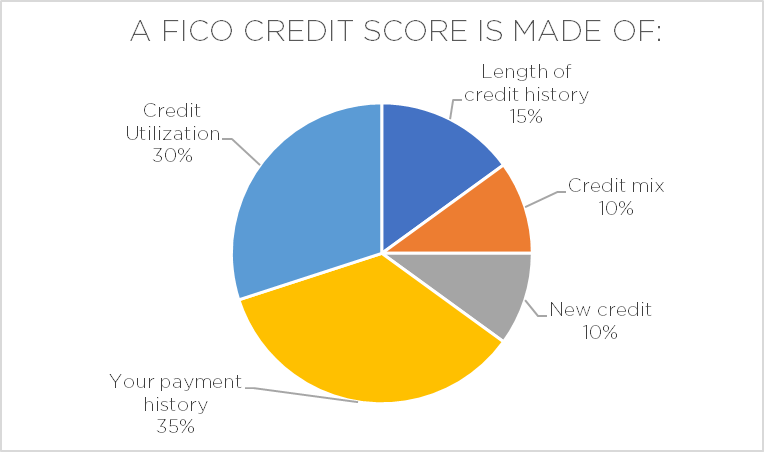
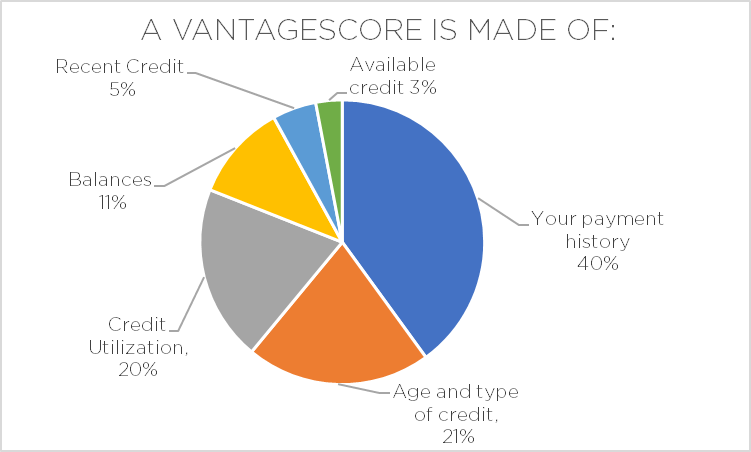
Equifax®, Experian®, and TransUnion®, the three major credit reporting agencies, combined forces to establish yet another credit scoring model, VantageScore. They kept the 350 – 850 scoring range, but how various credit behaviors are evaluated within the model varies somewhat from the FICO® method. For example, both methods evaluate things like late payments, utilization, length of credit history, etc., but they assign different levels of importance or weight to these criteria. The graphic below illustrates how VantageScore measurements differ from those of FICO®.

UltraFICO™

As the saying goes on TV infomercials, “But wait; there’s more!” Someone who is just starting out or starting over with building a positive credit history can find it challenging to obtain credit without first having had credit. Introducing UltraFICO™, a new offering from the folks at FICO, pioneers in the development of credit score analytics, that allows consumers to link their checking and savings accounts to their credit score.

Although checking and savings accounts are typically not included as part of your traditional credit score, demonstrating evidence of responsible financial behavior by keeping a positive bank balance and regularly paying bills can help build your UltraFICO™ score. Working jointly with Experian, one of the major credit scoring institutions, UltraFICO™ scores will initially be available (at the time of this writing) through a limited group of lenders as part of a pilot phase for consumers who may not have access to credit or who might be eligible for better credit terms.

This initial pilot phase is being used to fine-tune of the launch of this new scoring model. Following the pilot phase, the UltraFICO™ Score is expected to become more widely available. If you are interested in participating in this program and obtaining your own UltraFICO™ score, visit their website and complete a brief online form.

Why different scoring models?

As with all things in the marketplace, demand drives supply. In the world of lending, one size does not fit all, and different lenders across a variety of industries still prefer to evaluate potential borrowers according to their own models, so a variety of credit scoring models has evolved to cater to lender needs. Keep in mind, the credit scoring and reporting entities make money by selling scores to lenders, so they periodically offer something “new and improved” to help their lending customers make more informed decisions.

What does it mean for you?

While it can be confusing to figure out why your FICO® score is one number and your VantageScore is a different number, in the big scheme of things, the numbers themselves are not all that important. Yes, a higher score is better than a lower score, but the more critical measures of our financial wellbeing remain the same, regardless of credit scoring model:

  • Do we have enough extra cash on hand (emergency fund)?
  • Are we saving enough for retirement?
  • Do the bills get paid on time (no late payments)?
  • Are we using a strategy to pay off consumer debt quickly?

I still keep track of my credit scores, of course, mainly as a way to see if anything unusual might be going on. When it comes to focusing on specific numbers, though, I’m more concerned about meaningful values like blood pressure & cholesterol than I am about FICO® and VantageScore. In fact, the less I worry about those last two values, the better I do with the first.


Are You Making The Most Of This Employee Discount Program You Probably Have?

January 16, 2019

I was recently facilitating a workshop about money management and the discussion turned to finding ways to save money. Several people in attendance started talking about discounts they receive on various things as an employee of their company.

As someone who is always looking for hacks to save money, I was so excited to hear this conversation unfold. One gentleman mentioned he saves 20% each month on his cell phone bill. Another mentioned they just saved on travel for an upcoming vacation his family was taking. One of the attendees was an HR representative and she took some time after the workshop to show everyone the website with all their “perks at work” and it was awesome to see all the things they could save on!

Savings from A to Z

When I got home I started looking at my own employee discount program – I wanted in on this too! I could not believe what I was missing. Here are a few examples of things we get discounts on:

  • Clothing
  • Cars – yep, on actual cars. Not to mention insurance, service, and maintenance
  • Travel – airlines, hotels, car rentals, and vacation packages
  • Electronics
  • Fitness
  • Child Care
  • Cell phone – phones and plans
  • Entertainment – concerts, sporting events, movies, and theme parks
  • Appliances
  • Flowers
  • Wine (score!)
  • Shipping
  • Toys
  • Tax Preparation

The list goes on and on. You even earn points as you go that you can use later for more stuff. Many of these programs also offer temporary deals around the holidays and other times throughout the year.

Pump the brakes

As I was looking at all these discounts, my mind starting racing about all the cool stuff I could buy. Then I stopped myself short – is it really “saving” money when you’re actually spending it? Remember, a 30% discount on something you don’t need is still a bad deal for your spending plan and your important financial goals if it wasn’t something you had planned for already.

Worth looking into

So I can see how these programs can actually lead to potential over-spending, but if you are like me, you may not be taking full advantage of some great savings on everyday things and those big-ticket items that often pop up as needs from time-to-time. If you have to replace the fridge, why not get a discount? Family coming to visit and wanting to check out local museums? Definitely worth looking to see if you can get a deal on tickets.

Saving money can be hard, but looking all resources – especially those offered through your employer can help make it easier. Thanks to those workshop attendees for opening my eyes to this program!

8 Ideas To Make The Biggest Impact With Your Bonus

January 08, 2019

This time of year, we often talk with people who are preparing to receive a bonus at work, either about how to make the most of it or how to best handle the taxes, or ideally, both!

Depending on your line of work, earning a bonus may come along often or only rarely, but regardless, when it does, it’s easy to start dreaming of a bigger home, nicer car or even just a fancier wardrobe. Sometimes, the money is literally spent on material things before we actually receive the deposit in our account.

Will it make a big difference? Could it?

At the extreme, many of us think that having more money will make our lives easier, only to find that when we look back over the years we’ve received the bonuses, we realize that the extra money was nice, but nothing really changed in the way we feel about our financial situation. Or we start expecting bonuses so that when they go away, we are financially unprepared for the loss of income.

Hitting the pause button

The next time you find yourself preparing to receive a bonus, before you start bookmarking properties or loading up your shopping cart, PAUSE. This is the perfect opportunity to make a huge impact on your future finances (yes, often by forgoing the immediate spending) and to ultimately make sure that you never have to revisit these thoughts again.

Here are eight suggestions that may not sound very exciting, but when taken seriously, can get you to the point of NOT depending too heavily on bonuses in order to have the life you dream of.

1. Accelerate debt pay-off – Use the Debt Blaster calculator to find out just how much sooner you can get those lingering student loans or credit cards paid off by making a big lump sum payment.

2. Bump up your emergency fund – If you don’t yet have several months of expenses set aside in a separate account, this is your chance to check that off your financial priority list.

3. Max out your Health Savings Account (HSA) – If you are enrolled in a High Deductible Health Plan (HDHP) but aren’t funding it to the maximum amount allowed, this is a good opportunity to do so. Not only will it reduce your taxes, but if you can avoid spending the money on everyday stuff and save it for potential bigger expenses down the road, it can serve as a back-up to your emergency fund.

If you haven’t contributed enough to hit the maximum allowed for last year, you actually have until the tax filing deadline in the spring to send a check or make a deposit directly to the financial institution where your HSA account is held and have it count as a deduction from last year’s income.

4. Contribute more to your 401(k) – Retirement may seem way off (especially if it literally is), but saving more in your earlier years will give you more options for later years. Use the Retirement Estimator calculator as a way to gauge how even just one percent more saved at a young age could mean retiring a year or more earlier than you expect, then consider using some of your bonus to allow you to bump up your per-paycheck contributions.

5. Save for short and/or long-term goals in a Roth IRA – You can put an extra $5,500 into a Roth IRA for 2018 ($6000 for 2019), and even more if you’re 50 or older. When just starting out, a lot of people actually use a Roth IRA as another back-up emergency savings account. Since whatever you contribute can always be taken out tax-free and penalty-free, it can be a way to build up an emergency fund, while also boosting your long-term savings if you end up not having an emergency.

Check out these 12 benefits of a Roth IRA on top of that. (By the way, you can still make a 2018 contribution to a Roth IRA by the tax filing deadline of April 15, 2019.)

6. Purchase some stock through your Employee Stock Purchase Plan (ESPP) at work – If your employer offers an ESPP, it’s a great way to get more bang for your buck because you purchase shares of your employer’s stock at a discounted price (or least without having to pay a brokerage commission). You can leave that money alone until retirement or some people prefer to sell right away to take the earnings from the discount, then put that money toward their next big vacation (or one of the other 7 options here).

7. Set it aside for future education needs – This is a great opportunity to boost savings for your kids’ (or other loved ones’) education expenses. If you don’t already have a 529 account, that’s one way to get started. There are other ways to save as well, which are included here.

8. Accelerate your mortgage pay-off – Maybe you dream of paying your mortgage off early – your bonus can help you make extra principal payments and get you closer to achieving that goal. You can run the numbers with this calculator (scroll down to see the impact of an extra payment or two each year.)

Beware of lifestyle creep

At the end of the day, the point is to enjoy life and a part of enjoying life is having enough money to pay the bills and save for the future while still living in the moment! Beware of lifestyle inflation: our “needs” tend to grow as our income grows. I’m not suggesting that you continue to live like a college student, but living below your means is the key difference between most “everyday” millionaires and those who may earn the same salary, but spend every dime they have.

Like I said before, be careful you don’t become dependent on your bonus for living expenses and instead use them as an opportunity to supercharge goals you’re already working toward. You put in the hard work needed to earn those bonus checks. Now, make the most of it by making sure you are financially stable in the future.


The Ultimate F-word: How I’m Approaching My Goals Differently As Fifty Approaches Me

January 03, 2019

Editor’s note: As we launch 2019, I’ve asked each of our bloggers to reflect on their own personal goals, plans or thoughts on the past or upcoming year. Our hope is that you not only draw inspiration from our sharing over the coming weeks, but also that we are all able to feel more connected through our shared human experience and recognize that no matter where we are on our personal financial wellness journeys, that we all have similar hopes, dreams and struggles. Happy New Year! Here’s what Teresa has to say:

I’ll be reaching the grand age of 50 this June, and I’m determined to reach this milestone with as much grace as possible. On most days, however, it seems my deteriorating body didn’t get the memo.

This year, I had several appointments with my physician, a nutritionist, and other specialists and after being poked, prodded, x-rayed, and scanned, the general diagnosis is simply that “You’re getting older.” What the ****? Can I please have my co-pay refunded?

Since I wasn’t able to find the magic bullet for feeling better, I’ve decided it’s time to get back to the basics for 2019. I’m going to approach my fitness goals using some of the tried and true methods I’ve used when it comes to my finances.

Pay myself first

The phrase “pay yourself first” is popular in personal finance meaning you should save to your investments and retirement accounts first each time you get a paycheck rather than spending it elsewhere and waiting to see what’s left over. By putting your savings on auto-pilot, you’re more likely to reach your goals versus someone who waits until the end of the pay period hoping there are funds left to save.

Using the same philosophy, I’ve learned I have to get to the gym every morning at about 6:00 as a part of my daily routine for any real progress. On the days I’ve planned to get there in the afternoon or evening, some emergency or unexpected fire pops up that needs my attention, and my trip to the gym gets sacrificed. If I get my workout in first thing, I’m energized the rest of day and know that I’ve done something good for myself regardless of how the rest of the day goes.

Moderation works

When it comes to meeting financial goals, we often have to remind ourselves that slow and steady wins the race. For example, I can’t pay off my mortgage early by throwing every extra dollar I have at it until I’ve rebuilt my emergency reserves. If I throw all of my extra dollars at the mortgage, I’ll be in no position to handle life’s next curve ball and will have to resort to a high-interest credit card.

Instead, I make small adjustments with my financial goals like ratcheting up my 401(k) contribution 1-2% every January, making one or two extra principal payments on my mortgage each year, and increasing my “emergency fund” contribution each quarter.

The same approach is true with my daily workouts. I went into my first few workouts this summer with a little too much gusto and spent a week recovering from the damage I did to my lower back. Shivers go up my spine now whenever I see a kettlebell or those battle rope thingy-ma-jigs. I’ve learned that at my age, I have to spend a good deal of time stretching before and after my workouts and I increase my weights slowly each week. I’m getting stronger every week while not doing damage to my muscles and joints.

Stay focused on the goal

When I’m faced with financial decisions – large or small – I’ve learned to ask myself “does this purchase meet one of my goals?” My weakness can be clothes. When I’m tempted to buy a pretty top or something that’s caught my eye, I ask myself, “Does this purchase help me reach any of my goals?” If the answer is NO, then I don’t buy it.

I’m working on asking myself similar questions when I’m just not in the mood to work out…

“Why am I getting up at 5:30 AM?!” So I can get back to rowing and enjoying the outdoors (there are ladies in their 70’s and 80’s doing this!) So I can keep up with my great nephews. So I can remain independent for the rest of my life if God’s willing.

Developing better fitness habits now will help me meet those goals. And studies indicate that I don’t have to kill myself or train like I did as a 20-year-old collegiate rower for results. I can work a variety of programs including strength training, yoga, Pilates, and other fitness routines to stay fit — in moderation.

I just need to find the method that works best for me, make these an automatic part of my daily routine, and stick with it. The results will come — slow and steady — which is just fine at this stage of my life.

How I Plan To ‘Bring It’ In 2019

January 02, 2019

Editor’s note: As we launch 2019, I’ve asked each of our bloggers to reflect on their own personal goals, plans or thoughts on the past or upcoming year. Our hope is that you not only draw inspiration from our sharing over the coming weeks, but also that we are all able to feel more connected through our shared human experience and recognize that no matter where we are on our personal financial wellness journeys, that we all have similar hopes, dreams and struggles. Happy New Year! Here’s what Chris has to say:

As we enter the new year, I really enjoy setting some goals for the various aspects of my life to work on. I’m not so much into resolutions and you won’t find me in the gym the first week of January (I do like to exercise, but do it at home), but a new year lets us all take a fresh look at our goals and work toward a better version of ourselves. So here are some things I will be working on in 2019:

My 2019 life focus areas

My financial wellness

  • Spending less on things and more on experiences. As my kids get older (almost 9 and 12), I find the fleeting time with them as kids compels me to want to expose them to experiences. Not to mention, they have more than enough stuff. I plan to do more skiing with them this winter and continue our travels to see National Parks, beautiful beaches, and cities we haven’t visited yet. Even small things like going for a hike or hitting golf balls are time well spent as a family. This is something we started doing in 2018 and will continue to do.
  • Continuing to work the budget. This one is not my favorite, to be very honest. But it is so important. I like to revisit household expenses once a year or so to make sure we aren’t overpaying for cable, cell phones, etc.
  • Saving for goals. I plan to increase my retirement savings a tad, fund a Health Savings Account (this is a new one for me), and finish paying off my car – hooray! The plan then is to use that money to increase funding for shorter term goals like vacations (see above).

My physical well-being

  • Continuing to exercise regularly. 2018 was a good year for me in this area. I was able to start a regular workout regimen, which to be honest I have done about a million times before. But this year I was able to stick with it and even do better with my eating habits. The results have been awesome, and I am super motivated to keep it going.

My mental well-being

  • Reading more. I used to read a lot and I’m not sure what happened, but I stopped. I already went to the library to get my library card and my goal is to spend the last minutes of the day reading in bed instead of watching something on the iPad.

My spiritual well-being

  • Spending more quiet time. For me, this takes the form of prayer and reflection. Maybe for you it is meditation. But taking time to quiet the mind and reflect and center is something I need more of.
  • Giving back. I can do better in giving of my time to make my community a better place. I want that experience for my kids as well. We’ll be seeking out ways to serve together throughout the year.

As you consider your goals for 2019, make sure you focus on all areas of your life. Check in with your goals at least once a quarter to see how you are doing. And be realistic (see this about setting SMART goals) in your goal setting. I wish you all a prosperous and healthy 2019!

How I Perform My Year-End Financial Review

December 27, 2018

Editor’s note: As 2018 draws to a close and we launch 2019, I’ve asked each of our bloggers to reflect on their own personal goals, plans or thoughts on the past or upcoming year. Our hope is that you not only draw inspiration from our sharing over the coming weeks, but also that we are all able to feel more connected through our shared human experience and recognize that no matter where we are on our personal financial wellness journeys, that we all have similar hopes, dreams and struggles. Happy holidays! Here’s what Cyrus has to say:

As the year ends, I tend to turn my focus inward. I turn to the successes, the failures, and the changes that occurred in my life throughout the year. Obviously, a good bit of this introspection considers what went well and what didn’t financially. The intent is not to beat myself up about the negatives, but to learn what went well and what didn’t, then build from there. Here is how I assess my own financial decisions at the end of the year.

How to perform a year-end financial review

First, gather all your information

You may already have your opinion about the financial happenings of 2018, but before you give yourself a grade based on what you remember, pull together some reliable data. Here’s what I focus on:

Reviewing a budgeting app or online banking: If you use a budgeting app (for example, Mint) to look at your spending and budget targets, then much of the work for this step is already done. If you aren’t using an app, your online banking website may be tracking your spending for you, so check there. I use this information to track my budgeting goals and determine how close I was to sticking to them.

Reflecting on any financial milestones: What were the game changers for you financially in 2018? Did you get a higher than expected tax refund or bonus? Were there any financial surprises that threw your budget off? For me, one was definitely having to buy a car unexpectedly.

Taking your financial wellness assessment: This is a great way to track your financial health from year to year. Ask your employer if they offer an online financial wellness assessment as part of your financial wellness program.  If not, you can use this Financial Health Assessment to see how you are doing in the area of cash management.

Celebrating the victories: In the New Year’s spirit, take a moment to toast the decisions that went well financially. This year our family achieved a long-term goal of buying a family car with cash. The opportunity to do so wasn’t expected, but because we had some cash tucked away for sudden financial changes, we were able to take advantage of a surprising situation. My wife and I have high-fived each other a few times to celebrate reaching that goal. We have since added additional goals to our financial bucket list.

Analyzing the problems: Where did things get off track this year? Were you anticipating a tax refund but ended up having to pay? Were you caught financially unprepared for a financial emergency? It is easy to tuck away those negative memories, but this is where that old saying about those who don’t learn from history are doomed to repeat it seems to hold true. What can you do right now to prepare if that situation occurs again?

Deploying your game plan: Create an action plan to make a change in your finances as the year ends. We offer several resources like this one that can give you some concrete steps to end the year. If your company offers a financial wellness benefit, speak with someone that can help you with your action steps.

Whether you have more things to toast than problems to analyze or vice versa its ok. A new year is a great opportunity to take the lessons learned and use them make your finances more efficient and less stressful.


How I Stopped The Grinch From Stealing My Christmas

December 21, 2018

A few months ago, I got to travel to one of my favorite cities, San Diego, on business. Having lived in Kansas most of my life, I appreciate any opportunity to see the ocean and enjoy the warm weather, especially when things are getting cooler back home and a cold winter is just around the corner.

Navigating Southern California traffic

Although I’ve visited San Diego before, I’ve never driven in the city and I’m not familiar with the highways and roads. I took a few wrong turns in my rental car, was startled by the motorcycles whizzing between the lines of cars on the highway, and caught a couple of rude hand gestures being directed my way (or maybe there’s a secret “welcome to San Diego” sign I’m unaware of).

Anyway, I trusted my phone’s GPS when she warned for two miles that my exit was coming up on the left. Being the planner I am, I gradually maneuvered my way over to the left side of the highway but avoiding the lane marked for “carpools.” When Ms. GPS finally said “take the exit on the left” … well, I did just that.

The Grinch wearing a badge

At the end of the exit ramp, a member of the California highway patrol leaned down, pointed at me, and promptly waved me over. He explained I had been driving in the carpool lane. I tried to respectfully argue that I had not. He further explained that I had illegally taken an exit for “HO’s only,” which further confused me. Apparently “HO” stands for “high occupancy” and since I didn’t qualify as a “HO,” I was not allowed to use that exit.

Where I come from, HO is what Santa says

I didn’t score any sympathy when I asked why they had to make it so complicated. I explained that I understand “carpool,” but I’ve never heard of “HO,” and I’m from out-of-state in a strange city, and I’m in a rental, etc. Long story short, he was feeling Grinch-y and I received my first ever traffic citation for a whopping $490. To really rub it in, the deadline for payment was just a few days before Christmas.

I fought the law and the law won

My first instinct was to fight it. I used my complementary consultation with an attorney that we have through our Employee Assistance Program (EAP). I also tried to beg for mercy with the court, which was time-consuming from another state. Eventually, I realized the holidays were nearing and I just needed to put on my big girl pants and pay it.

How I kept the Grinch from ruining Christmas

While $490 is enough to be a potential set-back in my financial world, the good news is that I had set two goals back in January, 2018 that would help me through this and ensure my holidays were still festive:

  • First, I had made automatic deposits into my emergency reserves with every check, so I was more than able to pay the ticket without impacting my ability to pay my December bills.
  • Second, and most important for me, I had set up a separate savings account for gifts only and deposited a small, set amount from every paycheck to have enough for Christmas gifts (like my colleague explained in this blog). So, despite the unexpected wallop to my personal finances, I had saved enough to still get gifts for my family and loved ones.

Paying a traffic ticket, especially a ridiculously expensive one that I don’t even feel like I deserved, really rubbed me the wrong way. But I’m not about to let it ruin this time of year for me. I think I’ll just pretend the fat payment I made to the beautiful city of San Diego was a well-deserved gift for the holidays.

2019: Making Changes To Fund My Expanding Bucket List

December 20, 2018

Editor’s note: As 2018 draws to a close and we launch 2019, I’ve asked each of our bloggers to reflect on their own personal goals, plans or thoughts on the past or upcoming year. Our hope is that you not only draw inspiration from our sharing over the coming weeks, but also that we are all able to feel more connected through our shared human experience and recognize that no matter where we are on our personal financial wellness journeys, that we all have similar hopes, dreams and struggles. Happy holidays! Here’s what Mark has to say:

As I get older, my new hobbies seem to get more and more expensive: Photography (the image for this post is actually my own work). Scuba Diving. Underwater photography. And the wife is eager for us to buy a camper and see America (as long as there is some scuba diving nearby, I’m all for it). Although my bucket list may seem unlimited, my income and household budget are not. Where to make changes to support these new interests?

Preparing for upcoming changes

While it is nice when life remains predictable and the budget remains fairly constant, reality is often different. Our lives are in motion, and change is inevitable. With the end of another year upon us, this notion has me pondering what changes are likely in store for us next.

Probably our biggest change is getting ready to downsize and declutter our home. With two of our three children more-or-less out of the nest (we hope), we have way too much space and too much stuff these days. Selling off most of our furnishings and other accumulated household debris should fetch a few dollars to help fund my hobbies. And moving to a smaller (and therefore less expensive) home will make a huge difference.

Now if I can just convince my wife to wait until the college bills are gone before we invest in that camper…

The Pros And Cons Of Last Minute Christmas Shopping

December 19, 2018

I have a confession to make. I am a last-minute holiday shopper. If you have ever wondered who scavenges the picked over shelves on December 23rd and 24th, it’s me.

Why do I wait until the last minute?

First of all, it takes me a little while to get revved up for the season. I avoid anything Christmas-themed until after Thanksgiving, at which time it becomes unavoidable. Eventually, after attending a few holiday parties and watching Charlie Brown Christmas a couple of times, I am ready to attack the task about a week before the big day. My late shopping ways has it pros and cons.

Pros of last minute Christmas shopping

Fickle Christmas requests

My kids start campaigning for their ever-evolving Christmas lists in May. If we bought their gifts as they asked for them, they would forget what they asked for by the time Santa left them under the tree. I find it easier, unless they are really passionate about one thing, to zero in on what they really want closer to the actual day. Waiting to buy the presents also saves the concern about the kids finding our stash too.

Avoiding the doorbuster hype

Some late season deals are as good, if not better than the door buster/Black Friday/Cyber Monday sales. Also, I’ve found that I am just as likely to buy something for myself rather someone else when I start shopping earlier. Waiting keeps me focused.

It’s a better environment for hunter/gatherers

Those picked over shelves look great to a last-minute shopper because there is less choice – it is easier because you avoid decision fatigue. Also, the late crowd is all business. There are less people slowly perusing the store aisles humming holiday songs, so my patience isn’t tested – we are all on the same mission!

Reasons to avoid last minute Christmas shopping

It may increase stress

For some, holiday shopping later in the season is nerve wracking. They spend the entire month worried about finding what they want to give. That is no way spend the season. Last minute shopping is best suited for people who totally set aside the concern until they are ready to shop. If you are going to worry about procrastinating, don’t do it (as in, just get out there and shop already).

If there is no question about what gift you’ll buy, is it is better to get it as soon as possible

Sometimes that loved one is really clear about what they want. Other times you have a good idea regarding that extra special gift you would like to find. In those cases, it is better to set aside your personal preference and get it as soon as possible. The gift may be in high demand and therefore may go up in price due to scarcity.

Starting early gives you time to be strategic and find the best deal on that extra special present. Shopping online is a great way to avoid the traffic and crowds. Also, shopping early gives you plenty of time to deal with shipping delays.

Ironically, you must plan to procrastinate

If you plan to shop early or late, you will need to be prepared financially for the shopping. Our family has an overall limit on Christmas expenditures, regardless of the timing of the actual buying. We want to walk out of the season having created memories instead of financial regrets, and planning ahead financially allows that to happen.

Late holiday shopping is not for everybody. I have friends that complete their shopping in October and the gifts are wrapped before Thanksgiving – for them it gives them a better sense of peace and allows them to enjoy the season. But if you are slow to get motivated like me, use the tips above to make the most of your holiday shopping.

5 Steps To Determine Your Financial Priorities

December 17, 2018

Do you ever find yourself wondering what you should be doing to manage your finances? What’s the right next step? What should you focus on first?

Well, you’re not alone. This is a regular conversation I have with people. To help, I’ve created this step-by-step guide to help you get things in order and see what you should focus on next. 

STEP ONE: Do you have at least $1,000 in savings to cover emergency expenses?

Got it: Great. You can use that money to cover unexpected medical, auto, or home costs that come up. Go to STEP 2.

Not there: Now is the perfect time to create a monthly spending plan via paper/excel or maybe even an app if you haven’t already. Look for ways to cut back on things killing the budget and find ways to improve how you manage your spending. If you need help paying bills or covering the basics, check out these ideas.

STEP TWO: Are you saving enough in your 401(k) to get 100% of your employer’s match?

I’m getting the match: Perfect. You’re getting “free money” and tax benefits at the same time. Move on to STEP 3.

  • For guidance on how to invest the money you’re contributing in your 401(k), go here.

I’m not: Increase your contribution to at least get the match. If money is tight, consider bumping up your contribution just 1% or more per year until you hit what’s needed to get the match

  • Your 401k might have an auto-escalator tool, which let’s you set a schedule of automatic increases – set it up for the same time you get your annual raise and you won’t even notice the difference.

STEP THREE: Do you have any high interest rate debt? (greater than 4%?)

I don’t: Great. Move to STEP 4. Just remember that not all debt is created equal. Interest you pay on student loans and mortgage debt may be tax deductible. However, try to keep these total payments under 25% of your monthly income.

I do: You finished STEP 2 above, so you already made sure you’re contributing enough to get the match from your employer in your 401(k). Now it’s time to make a plan to eliminate that debt. You can choose to pay off your debt starting with the lowest balance first OR starting with the debt with the highest interest rate.

STEP FOUR: Do you have enough savings to cover 3-6 months of necessary expenses?

Yes. Got it under control: Nice. On to STEP 5. This also helps in the event you find yourself looking for work. (It typically takes 1 month to find a job for every $10,000 you make.)

Not yet: Pay yourself first.You can set up an automatic transfer from your paycheck into a separate savings account until you’ve built up enough savings. Here’s how to start or boost your emergency fund. 

STEP FIVE: Are you on track to replace at least 80% of your income in retirement?

Yes, I’m on track: Congrats. Expenses tend to drop in retirement, but make sure to run a projection yearly to stay on track.

  • Not sure how you much you’ll need for retirement? The sources of income you’ll have in retirement, what your likely retirement expenses will be, how much of a gap there is (if any), and how long you might spend in retirement all come into play. Go here to find your retirement number.
  • Have a Health Savings Account (HSA)? Check this out first.

Not yet: Use the Retirement Calculator to see where you stand and try to increase contributions as needed.

  • Remember, just like in STEP 2, consider bumping your contribution up just 1% or more per year until you hit the percentage you need to contribute to get on track for retirement.

Trying ‘softer’

Figure out where you are on this guide and start working on your finances from there. I heard someone quote an author once stating that instead of trying harder, we should “try softer” to make one simple change or focus on one step at a time. Some of the best advice ever.

7 Financial Steps To Take Before The Year Is Over

December 14, 2018

It’s safe to say that you will start to hear a lot of talk about New Year’s resolutions over the course of the next few weeks. Since money and wealth are integrated into many aspects of the life journey, it isn’t too surprising that financial resolutions are generally near the top of those well-intentioned “to do” lists for the new year. But if you’re like me, you’ve broken most of them before Groundhog Day.

That’s why this year I’ve decided to make and keep some New Year’s resolutions before the new year even starts. That’s my financial holiday gift to myself. Here are some actions you can take before the year is over as an opportunity to make sure you are doing everything to improve your own financial wellness during 2019 (and beyond):

1. Create a plan to aggressively fund your savings account

Over the past year, I’ve met with many individuals and families who are dealing with some major life changes and challenges that have made the emergency safety net a necessity. This may seem like a basic step, but most households report being woefully off track with this fundamental financial goal. According to a Federal Reserve report on financial well-being, less than half of U.S. households have enough savings to cover a $400 emergency without using credit or relying on friends and family.

A general guideline is to keep around 3-6 months of basic living expenses in an emergency savings fund. Some people are better suited maintaining an emergency savings fund of 6-12 months of living expenses (especially those in an uncertain job situation or with concerns about the economy). If paying off debt is a current priority, you should at least maintain a starter emergency fund of around $1k-2k even if you are in debt reduction mode.

In addition, consider contributing to a Roth IRA or HSA since these accounts provide tax advantages and may also be considered a supplemental part of your emergency fund. Just be sure to keep your core emergency savings in relatively stable, liquid assets that are not subject to market volatility.

2. Review your income tax withholding

Are you looking for a quick and easy way to increase your take-home pay so you can free up extra dollars to save in 2019? Or maybe you’re worried that you haven’t had enough withheld due to the tax change this year? You may need to adjust your income tax withholding, especially if you’ve had any changes in your income or expenses so far this year or if you’ve received a large tax refund in the past and you’re tired of loaning your money to Uncle Sam at zero interest.

It may seem easy to continue with this forced savings program right now, but with a little discipline and a few simple changes to your Form W-4, you can put that money from your upcoming paychecks to work for you right now rather than waiting to file your tax return. For a calculator you can use to figure out your recommended tax withholding, visit the IRS withholding calculator or this alternative version from TurboTax.

3. Establish a separate savings or checking account for irregular expenses

It may be too late to save for travel expenses over the holidays if you do not already have a plan in place. However, it’s not too late to start planning for upcoming vacations or to start setting aside money for the 2019 holiday season or annual expenses such as taxes and insurance.

This is where a planned spending account comes into play. You probably have heard of this concept a time or two before, but not everyone has a formal plan in place to prepare for irregular expenses. In fact, these non-systematic expenses are usually the ones that can blow up a budget and create financial stress.

This effective money management technique simply requires us to create a separate account for those expenses that don’t occur on a regular basis but still belong in your personal spending plan. Rather than turning the calendar to December and wondering how to pay for those holiday gifts, taxes, insurance, HOA dues, etc., you can go ahead and work them into your spending plan right now.

4. Schedule a “money talk” with a spouse, significant other, or friend

It is important to have regular conversations about your financial goals if you are married or in a committed relationship. Regardless of your money personality or who normally handles different financial roles (paying bills, spending money, investing, planning, etc.), regular money dates can help couples overcome prior roadblocks to working together as a team.

If you do not have a financial planning partner or your significant other is creating significant roadblocks on your path to financial freedom, you can reach out to a trusted friend or family member to serve as your accountability partner or voice of reason. Then again, some of our friends aren’t the best models of financial responsibility so you can always reach out to a CERTIFIED FINANCIAL PLANNER™ professional or financial wellness coach for additional guidance.

5. Review your membership accounts and subscription fees

With all of the different account subscriptions and memberships that we maintain in today’s connected world, it is easy to lose track of the actual costs of these conveniences. That is why it’s advisable to complete an annual inventory of these type of accounts. As a result, Amazon Prime, Netflix, Hulu, Spotify, etc. each have to answer the same question at least once every six months from me – are you still worth keeping?

6. Verify your debt reduction plan is on track

Not surprisingly, debt consistently remains at the top of the list of obstacles holding people back from reaching their important goals like retirement or simply building up savings. Our latest research suggests that many households are still in need of a plan to reduce or eliminate high interest debt.

If debt reduction is near the top of your financial to-do list for next year, check out our Debt Blaster Calculator to see if you are on track to get those credit card balances and other creditors out of your life. If you don’t have a plan, your new year financial checkup should provide you with an excellent place to start.

7. Re-balance your investment portfolio

One investment best practice behavior that most financial professionals recommend is to re-balance your portfolio on at least an annual basis. If you haven’t reset your target asset allocation for current and future investments, the end of the year is an ideal time to do so. Take advantage of automatic re-balancing if it’s available through a retirement plan at work to simplify this process with a click of the button. While you are examining your retirement portfolio, you can also review your answers to important questions about the status of your own retirement plans.

Taking all seven steps between now and the end of the year is an unlikely goal for most of us. But a little dose of financial awareness during the busy holiday season can provide you with lasting gifts of financial wellness. Try choosing 1-2 of these action steps and commit to checking them off your “to do” list. Don’t wait until next week or next year to start turning those good intentions of yours into a meaningful financial life plan!

How To Earn More Interest On Your Emergency Savings

November 29, 2018

My wife and I were driving home from dinner not long ago and we were stopped at a traffic light. BAM! Someone hit the rear of our car, making our memorable evening out a little too memorable. No one was hurt, but the offending driver was a little slow to produce credible insurance proof, so I had my insurance company handle the repairs initially.

Since I like to keep my monthly premiums as low as possible, there went $1,000 out of our emergency fund for the deductible. A week later, someone backed into the side of my parked pickup truck and made a quick getaway, leaving me stuck with another insurance claim – and another $1,000 deductible out of my pocket. Ouch.

You probably keep some cash set aside for emergencies too, right? I hope you’ve squirreled away somewhere between three and six months of expenses into a savings account for those surprise expenses that life throws at us. Financial planners almost universally recommend this strategy as the preferred way to avoid taking on expensive credit card debt (or worse – payday loans).

Earning more on your emergency savings

Even though we know having cash on hand is the best way to handle these emergency expenses, the minuscule interest rates on savings accounts makes it difficult to watch all that cash just sit there and do practically nothing else for us in the meantime. Surely, there is a better way? Actually, there are several better ways to earn a few extra bucks on your extra (emergency) bucks. Let’s take a look at a few alternatives.

Credit unions & community banks

If you do your banking at one of the big commercial banks, you’re probably not earning much interest at all on your savings. For your emergency fund, look around for a credit union or small regional bank alternative in your area. Having worked in the credit union for several years, I admit to some bias here, but I also have plenty of facts to support my bias. For instance, as I am writing this, a well known large bank’s website currently shows interest rates on their savings accounts to be a whopping 0.01%. Yes, that’s one one-hundredth of one percent.

At that rate, you would have to keep $1,000 (one thousand) in your savings account for a whole twelve months to earn one single penny. My local credit union, on the other hand, pays 0.25% on their regular savings accounts and 0.30% on money market accounts. Still not that much to brag about, but significantly better – 25 times better! They also offer a special rate on youth savings accounts, paying a whopping 2.96% on balances up to $500!

The lesson here: shop around for specials. Sometimes community banks and credit unions are seeking additional deposit dollars (so they can make more loans) and will pay you pretty handsomely for the use of your money.

Online only banks

If you don’t mind doing your banking business online instead of face-to-face in a local brick & mortar building, the world of online banking (and their lower overhead costs) might be a good fit for you. Keeping your emergency funds just out of arm’s reach might also help you avoid raiding the piggy bank for non-emergencies.

A good place to shop around for online bank savings rates is www.bankrate.com. As I look there today, I see interest rates on savings accounts as high as 2.10%, with a minimum deposit as low as one dollar. CD rates are as high as 2.60%, but you must commit those dollars for at least one year to enjoy that rate. In any case, online banks are worth taking a closer look!

Roth IRAs

I am often asked if a Roth IRA makes sense as a type of emergency savings. My response to this question is both yes, and no.  As you may know, IRS rules do allow for early distributions from a Roth IRA as long as the amount you take out is not more than what you have already contributed (i.e., don’t touch the earnings). So, technically, yes you could tap into your Roth IRA to cover an emergency expense, but I don’t recommend using this as your primary emergency money.

Short term cash needs (emergencies) should come from liquid, short term cash, and you will find those funds in your savings account at the bank or credit union. Roth IRAs are for longer term needs, such as supporting you in retirement, and as such, these funds should be invested in longer-term things (stocks, bonds, mutual funds, etc.) that can grow at a rate better than what a savings account pays. As such, your Roth IRA is not suitable as an emergency fund – except maybe in this next instance.

Consider it as your “back-up” emergency fund

Suppose you already have three months of critical expenses covered by cash in your savings or money market account.  Then – and only then — you might consider your Roth IRA as a backup emergency fund for really big emergencies, such as an extended bout of unemployment or an expensive medical procedure with steep out-of-pocket charges.

How I’m Planning To Manage My Holiday Spending

November 27, 2018

We all know that the holidays can be a total budget buster. It is so easy to get caught up in the season and wind up spending more money than we have or intended to spend. This leads to the credit card shame in January, when we vow that next year will be different.

Rather than let that scene play out for me, I’m going to try something different this year. I like to keep things simple – so here is my plan: Only spend cash and unused gift cards. That’s it. Here’s how I’ll do it.

Using cash only

Many you have probably done this in the past, but I am going to shop only with cash this year. I’ll be leaving all cards (debit and credit) at home so there is no temptation to go over my budget. Once I know how much I plan to spend on a loved one’s gift, that is the amount of cash I will have with me to spend for them.

The logistics

This requires some planning throughout the year. My wife and I set our total holiday budget back in June, so we had enough time to set aside the funds we will need to execute our strategy. I am generally not one that carries around a lot of cash, so this will be different for me. I also have to think about what happens when I buy an item on sale – do I buy more for that person since I’ll have cash left over? Or tuck the savings away for something else? That’s up to you to decide.

What about online shopping?

I plan to do most of my shopping in person, but I realize that online may offer a lot better deals on certain items. This strategy can still work though. If you do a lot of online shopping, consider having a separate checking account that only has the money you want to spend on holiday shopping and use that debit card to achieve the same result. Just be careful to stick to your plan and don’t deviate (seriously, DON’T DO IT)!

Using the gift that keeps on giving

The other thing I plan to do (don’t tell my family and friends) is to use the pile of Amazon, Best Buy, fill-in-the-blank retailer gift cards from holidays and birthdays gone by that I haven’t used. I sometimes (ok, most of the time) forget that I have these, and many have never been used or still have a balance on them. So, I am going to use those to supplement my cash strategy and help with any online shopping I will be doing. As of now, I am sitting on about $200 worth of re-gifting gold! I could spend it on some gadget I don’t need, but instead I am going to use them on what I really want – making sure I don’t get the credit card blues in January!

It has been brought to my attention by my loving wife that this is kind of cheap (I added the words kind of) and not in the spirit of the giver’s wishes. I disagree. Free money is near the top of the list of my favorite things, so I see it as thrifty. Besides, would the giver prefer the cards lay unused in my desk drawer forever?

Keep things in perspective

So there you have it, my plan for Operation 2018 Holiday Spending. No matter what your plan, the most important thing is to make sure it involves a budget you can afford and mechanisms to make sure you stick to it. And above all, make sure you take care of yourself this holiday season; spend time with the ones you love the most, take time to give back, and reflect on all the good in your life and give thanks.

Happy Holidays from my family to yours!

How You Can Now Protect Your Credit For Free

November 26, 2018

Are you worried about identity theft? There’s no need to pay a monthly fee or even a one time fee for credit protection. As of this fall, you can now place and lift a security freeze on each of your credit reports (Experian, TransUnion, and Equifax) for free.

What exactly is a security freeze? A security or credit freeze prevents anyone from opening credit in your name without your PIN. Without a freeze, an identity thief could use stolen personal info to open credit and run up debt in your name, ruining your credit score.

Is there a downside to placing a security freeze? Now that it’s free, the only cost is the few minutes it takes to place the freeze and the few minutes it would take to temporarily lift the freeze and then restart it each time you apply for credit. Just be sure not to forget your PIN. 

How do you place the security freeze? You have to place it with each credit bureau individually. If you request it online or by phone, they have to place the freeze within one business day. If you request it by mail, they have to place it within 3 days of receiving the request. You can learn more, including the contact info for each credit bureau, here.

Is a security freeze all you need to protect your credit? First of all, it won’t address any bad info that’s already on any of your credit reports. (It’s been estimated that about 70% of credit reports have errors on them that could be hurting people’s scores.) It’s bad enough to be penalized for your own mistakes so you certainly don’t want to be penalized for someone else’s. You can check your credit reports for free every 12 months at AnnualCreditReport.com and dispute any mistakes you see there that could be hurting you.

I would also suggest credit monitoring, which you can also get for free for all the bureaus through CreditKarma.com (which covers TransUnion and Equifax) and FreeCreditScore.com (which covers Experian). Credit monitoring lets you know if anything happens to your credit that a security freeze wouldn’t stop.

For example, I once had a doctor’s bill go to the wrong address so I never paid it. I got a notification from my credit monitoring service and was able to fix the problem without it even being reported on my credit report. Otherwise, the bill likely would have gone into collections and negatively impacted my credit.

What else should I know? Do it now. This is one of the things that’s easiest to procrastinate since there’s no immediate benefit. The problem is that you never know when you may need it and by then, it will be too late.