The Shady Side Of Healthcare

July 12, 2017

If you’ve ever found yourself on the receiving end of an out-of-network medical bill, then you know the financial pain of realizing that having insurance is useless in that case, oftentimes despite your best efforts.

I learned this lesson early on — after a stray cat I rescued out of the grocery store parking lot bit me one rainy night in Cincinnati, my colleagues convinced me I needed a rabies shot stat, so I headed to the closest ER. That split second decision to go there instead of taking a moment to research an in-network urgent care center or emergency room ended up costing me $300, or $270 more than urgent care would have cost. As a 23 year-old new college grad struggling to find $25 to put in my savings account each paycheck, that was an expensive lesson.

Since then I’ve become a bit of a stickler about staying in network, going so far one time as making my husband walk home after being hit by a car on his bike so we could look up which hospital was in-network rather than calling EMS.

Balance billing despite your best efforts

The frustrating part is that despite best efforts, many of us will find ourselves on the line for a big medical bill for an out-of-network cost, even when we go to in-network providers for services 100% covered by insurance. One example is if you ever have a procedure in your doctor’s office that uses anesthesia, which I had last summer.

The doctor chooses the anesthesiologist, who is typically an independent contractor, and you have no choice in the matter who they use – you’d think if you’re using an in-network doctor at an in-network facility that you’d be sheltered from out-of-network issues. Sadly, this is wrong and I think it’s pretty shady. After I was “balance billed” to the tune of $955 for my procedure with no help from my insurance, I did some research.

Turns out this is a pretty common practice, according to Tom Torre, the CEO of medical expense management company Copatient. “Medical transport [ambulance services] and anesthesiologists are actually notorious for [staying out-of-network and charging patients outrageous amounts for services they didn’t have a choice but use],” he told me when I spoke to him earlier this year. Because you’re (hopefully) unlikely to be a repeat customer of either service, they really don’t care if you feel gypped by their billing practices — they intentionally stay out-of-network in order to maximize profits and they can bill you whatever they feel is fair for their service, insurance company limits ignored. Shady!

So what can you do?

Besides the obvious answer of doing your best to stay out of ambulances or needing surgery, the one thing I’ve learned over the past couple years of health issues is that no one else is going to look out for your financial well-being when you’re seeking medical care so you MUST do your homework and you have to know what to look out for.

Ask questions

When I learned that the same anesthesiology office was being used in procedures tied to IVF this month, I got right to work. First, I called my insurance to verify that I had coverage for anesthesiology and that the provider was indeed out of network. Then I called my IVF clinic to ask if I had any choice in anesthesiologists (I don’t). But the billing coordinator did tell me that they have a “self-pay” option where I pay the clinic versus being billed by the anesthesiology group via insurance. After verifying that the anesthesiology group’s bill would be much higher than the self-pay rate, I opted for that.

Try to strike a deal

Had I found that the self-pay rate was higher, then I would have negotiated for a discount through the anesthesiology group, which Mr. Torre tells me is typically about 20% (that was the outcome of my original dispute as well). The upside to this option would have been that even if my insurance didn’t help reduce costs, at least the amount would have applied to my out-of-pocket limits, so if you’re close to reaching that, you could end up getting help from your insurance either way.

What if it’s too late?

So what happens if you’ve already received the service and it’s too late to negotiate up front? Call the out-of-network provider and ask them for help. Often they will help you appeal to your insurance for some type of coverage (although it may just mean you’ll have their allowable amount added to your deductible) or at least help you set up a payment plan to ease the burden. Make sure you do this right away though, as these issues can take months to resolve and aged balances are often sent to collections regardless of where you are in negotiations.

If the best the provider can do is offer you a payment plan, ask for a discount before you agree. The billing rep may have to ask a manager, but it usually gets you something, especially if they know you’re on the hook for the whole amount. In my experience, setting up a payment plan directly with the provider is the best route to go, as they rarely charge interest as long as you pay on time each month.

It’s shady, but it is what it is

I wish I could say that there is some loophole that these companies are flaunting and that there is a way to get out of these charges, but there isn’t. It’s legal and it’s the dark side of our current healthcare system. The best way to protect yourself from bills like this sending your finances to pieces is to keep that emergency fund in place.

Want more helpful financial guidance, delivered every day? Sign up to receive the Financial Finesse Tip of the Day, written by financial planners who work with people like you every day. No sales pitch EVER (being unbiased is the foundation of what we do), just the best our awesome planners have to offer. Click here to join.

What to Expect When You’re Expecting

January 09, 2017

When I found out I was pregnant with my daughter, I thought a lot about what I needed to do to have a healthy pregnancy and birth. I didn’t consider how much it was going to cost. I had a healthy pregnancy, but during the last few days before labor, I developed high blood pressure, so I had to have extra monitoring for both me and the baby. My daughter was a breech baby, which we knew, and I ended up with an emergency C-section after nearly two days of unsuccessful labor in the hospital birthing room. My daughter was born healthy and I recovered quickly.

Luckily for us, I had excellent coverage from my HMO, so our out-of-pocket costs were minimal. However, for most families with low risk pregnancies, their costs could be in the thousands, especially if they have a high deductible health care plan. If a woman were uninsured and had a situation similar to mine, the cost could be $10,000 to $70,000, depending on where she lived and where she gave birth.

If you are thinking about getting pregnant or are already expecting, you’ll need to take care of your financial business in addition to your health. Even if you are insured, you are likely to have significant out-of-pocket costs for pre-natal care, labor and birth, and care for your new baby.  Step one is to contact your health insurance provider to see what’s covered:

Am I covered and how?

  • Will my insurance cover my pregnancy?
  • What kind of care does my insurance cover? What coverage is fully paid, and what costs should I expect?
  • What is the most I could pay out-of-pocket?
  • Does my health care provider offer a healthy pregnancy program and birthing classes? How can I participate?

What if I need more than the basics?

  • What happens if there are problems during the pregnancy which require special care?
  • Do I need preauthorization for any prenatal care procedures? What is the process for getting authorization?
  • How will I know in advance how much I will pay for a specific medical test or procedure?
  • What is the coverage if there are complications during birth?

What to expect for my hospital stay?

  • Do I need preauthorization for my hospital stay during birth? What is the process for getting authorization?
  • What if the hospital bills for a provider who does not participate in my health insurance without my knowledge (e.g., physician, lab, etc.)?
  • Do I have choices of where/how I can deliver my baby?
  • How many days can I stay in the hospital following the birth? What if I need a cesarean birth?

Is my baby covered?

  • Will my baby be covered right away under my health insurance? Are my baby’s costs covered if he/she has to stay in the hospital longer than me?
  • How can I add my child to my policy when he/she is born? Is there a time window (e.g. 30 or 60 days)?
  • Does my insurance cover any breastfeeding coaching and supplies?

While not everyone can plan in advance for the costs of pregnancy and birth, if you have the opportunity, estimate your out-of-pocket costs up front and build cash reserves to meet them. Even if your pregnancy is a surprise, you still have nine months to get prepared financially. That way, you will be able to focus on the joys of parenting and not the stress of unexpected medical bills when your baby arrives.


Do you have a question you’d like answered on the blog? Please email me at [email protected]. You can follow me on the blog by signing up here, and on Twitter @cynthiameyer_FF.


Make Retirement Great Again!

December 09, 2016

Sometimes I need to learn to not open my mouth and make smart alec comments. The other day, I was in a meeting with coworkers in which we were talking about retirement, and I joked that we needed to help people “Make Retirement Great Again.” As a result, I was given the challenge of writing a blog post with that title.

We are living in a world where pensions are being frozen or eliminated, Social Security is projecting a reduction in benefits in the next several decades and the burden of building a secure retirement is now falling on our shoulders – not the government or the employer.  Today’s new graduates are a generation that is facing a mostly “build it yourself” retirement platform. So here is my absolutely non-partisan “6 step plan” for every person (from new graduates to grizzled workforce veterans) in this country to “Make Retirement Great Again”:

1. During your remaining work years, know exactly where your money goes. When you know this, you are in a position of power. You can say “I agree with where my money is going” or “I want to change this up a wee bit.” The key is that you then have the power to make informed choices. Whether it’s Mint.com, an Expense Tracker worksheet, a spending log or some other form of organized knowledge, find a tool that works for you so that you know exactly where every dollar goes.

2. Save an increasing amount each year. Many 401(k) plans have a “rate escalator” feature that allows you to increase your contribution percentage at pre-set intervals. For those who work for companies where annual pay increases are predictably timed, that is an amazing opportunity to increase your 401(k) contribution by 1% per year. Over the course of a career, this could mean hundreds of thousands or perhaps even more than a million dollars in extra retirement savings for those who are young enough. If you don’t have this feature, pick a day – either your annual increase date, your birthday, or on January 1st – to increase your contribution every year.

I promise that you won’t notice the difference in your net paycheck after 3 pay cycles. It will become your “new normal.” However, it may enable you to retire years earlier or move to a lower stress, lower paid job late in your career or position you well in the event of a downsizing.

3. Eliminate debt. In discussing early retirement packages with many dozens of employees recently, one of the key factors enabling those who accepted an early retirement package to walk into life beyond their long term corporate job was the absence of debt. Those who still had credit card debt or a big mortgage were far less confident in their ability to accept the early retirement offer. Most of them couldn’t accept the package even if they desperately wanted to.

If you aggressively pay down debt, including your mortgage, that is a tremendous way to position yourself to go into retirement feeling secure. A zero debt level allows you to have a very low embedded cost of living. It also allows your accumulated savings and investment dollars to last a whole lot longer since they aren’t being drawn down as rapidly.

4. Know your income streams. I’ve talked to so many people who “think they know” how much they’ll get from pensions and Social Security, only to be completely surprised (mostly on the happy surprise side but sometimes on the sad side) by the level of income they can expect from these sources. Knowing your numbers is a huge way to prepare yourself for a great retirement.

If you have a pension, run multiple estimates. Know your monthly payments at age 55, 60, 62, 65, 67 or or any other age that is relevant. See how the benefit changes can help you create your retirement vision.

Do the same thing for Social Security. Use this retirement estimator to see what you can expect from Social Security. Feel free to hit the “create new estimate” button at the end and use various ages.

5. Plan for medical expenses. Fidelity prepares a health care costs for couples in retirement report annually. For a couple retiring in 2016, the estimate is $260,000 in healthcare expenses from retirement through death. This is a pretty staggering level of expenses. How will you prepare for this?

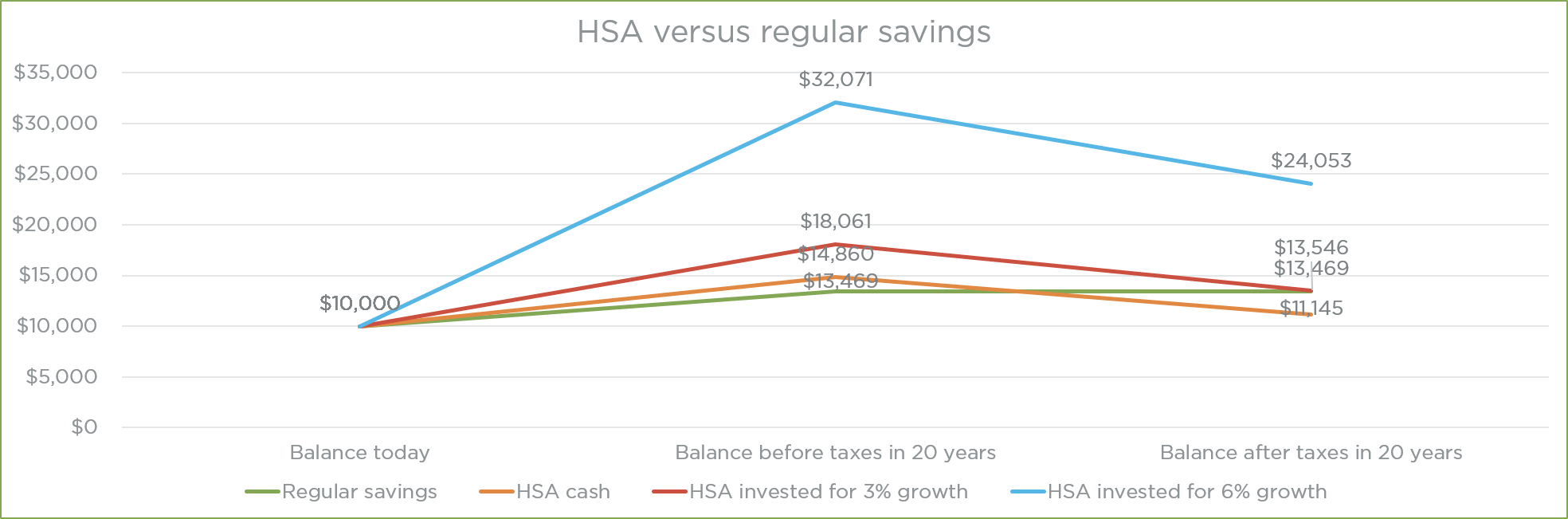
A health savings account is a great tool to build a pool of funds for future healthcare expenses. If possible, max out your HSA annually between now and retirement and try to pay for medical expenses from your regular daily cash flow so that the HSA can build up and grow. Most HSA accounts have investment options as well, so those funds can be invested for growth. In the absence of that option, save even more aggressively in your 401(k) or bank savings account or some other form of savings/investments.

6. Be the opposite of Congress and try to reduce expenses or implement a spending freeze. This goes right back to step #1 and closes the loop. When you know what your expenses are, you then have the power to make changes.

Find small ways to reduce your spending. Even if it’s a couple dollars here and a couple dollars there, it all adds up. After a few months, you won’t miss the reduced spending.

When I’m ready to go into “expense reduction mode” or “spending freeze mode,” I have a cheesy way to keep focused. Every time I pull out my wallet (or log in to an online purchasing platform), I ask “Is this something that I really NEED, or do I just WANT this?” It sounds overly simplistic, but I can’t tell you how many times it’s made me pull out of the Starbucks parking lot before I get out of my car. Give it a whirl and see if it works for you. For every dollar you don’t spend, it’s a dollar that can be added to your emergency fund, paid on debt or invested.


Should You File Your Taxes Jointly?

November 16, 2016

Post updated 1/17/2018

I remember the first year after my brother got married, when he called to ask me a tax question and shared that he and his new wife had decided to file “single” status because that way they both got refunds. I felt like a real jerk crushing their refund joy when I told them that they don’t actually get to choose. Once you’re married, your choices are narrowed to “married filing jointly” or “married filing separately” (or MFJ versus MFS).

Generally speaking, the government wants married people to file joint returns, so they make it pretty unattractive to file separately (although that’s gotten better with the new tax rules), even though the “marriage penalty” is real when it comes to tax brackets and other limitations. For most married couples, it makes the most sense to file jointly. But there are some instances when it might make sense to file separately: (You can switch from year to year.)

One spouse has high medical expenses but a low income: This would make it easier for the doctor bills to exceed the 7.5% threshold necessary to deduct medical costs.

One spouse explores more creative methods of tax avoidance: When you sign a joint return, you’re accepting legal responsibility for everything on the return. If you know your spouse takes liberties with tax deductions, you may want to file separately to protect yourself if the IRS comes calling. There is such a thing as innocent spouse relief, but you have to prove you actually didn’t know of the questionable practices to qualify.

You’re heading for single status anyway: Your filing status is determined based on your marriage status on December 31st. If you’re in the process of getting divorced, but it isn’t final by the end of the year, you may choose to file separately to avoid being tied together by tax issues after the marriage is over. When I got divorced many years ago, we filed in December, but the divorce wasn’t final until January. We filed a joint return that last year and agreed to split the refund, but that only worked because we still had a modicum of trust with each other on financial issues.

However, most couples choose to file jointly as there are many drawback to filing separately:

Tax brackets may be less favorable. MFS marginal brackets have taxpayers jumping up to higher brackets at lower incomes than MFJ taxpayers.

You may have lower deductions and credits. If one spouse itemizes, both have to even if one spouse would receive a higher deduction using the standard amount. Spouses split joint deductions like mortgage interest for a mortgage in both names, but charitable deductions and other itemized deductions go on the return of the spouse that paid them, which could leave a spouse with very few itemized deductions claiming less than they’d get as a single taxpayer.

If you file MFS, you also cannot claim many credits and deductions such as the earned income credit, adoption expenses, child and dependent care and education credits, and the student loan interest deduction. In addition, the child tax credit is reduced and you can only deduct $1,500 of capital losses per year versus $3,000 for MFJ.

For most people, filing jointly will make the most sense. The best way to decide would be to figure out your taxes both ways. Many tax software programs do this analysis for you. Then file according to the method that leads to the lowest overall tax bill for your family.


What’s Your Lifetime Medical Expense Plan?

October 14, 2016

I got a phone call from my daughter (senior in college) not too long ago, relatively late at night, asking me if I could text her a photo of my HSA card. I figured she was heading to the pharmacy to pick up some antibiotics for a sinus infection. But when I heard Nick & Danny (two of her roomies) screaming in the background to get towels and try to stop the bleeding, I learned that her calm exterior was masking something bigger.  It turns out that she eventually needed a whole bunch of staples and some glue to close up the large gash in her leg acquired when opening a box with a large knife when she couldn’t find her small scissors. She’s back to walking normally now so the crisis is over and she’s back to her normal daily activities.

It’s amazing to me how many different bills can come in from one injury. There were bills from the hospital (supplies, etc.), the ER department, the physicians group who treated her and a few others that I’m sure I’ve forgotten. The incoming mail probably hasn’t come to a complete halt just yet.

While I have an emergency fund set aside for emergencies (what else would it be for?), in the heat of the moment, I wasn’t thinking “let me pull money from my emergency fund so that she can get treated at the hospital.” I was thinking “Holy ****!  My daughter’s roomies are screaming and she’s got the calm “something’s wrong” demeanor. I need to get the hospital paid right now so that they see her.” So I used my health savings account card to pay for the trip to the hospital.

I deviated from the logic and reason that I use in my normal budgeting process. In the heat of the moment, I “messed up.”  But the good news is that I had my health savings account there as a backup. That wasn’t consistent with my long term plan, but I’m not going to look back with any regret.

My long term plan with my HSA is to build a pool of $100,000 or more before I retire. I plan to make the maximum contribution every year, pay for medical expenses from either my checking account or my emergency fund (if it’s a big one) and invest the balance for growth. Once I retire, the HSA will be there to pay for medical expenses for the rest of my life…or at least a good portion of the rest of my life.

What’s your plan to pay for medical expenses for the next 20, 30, 40 years or more? I have an outline of what I plan to do. I encourage you to come up with your own personal “lifetime medical expenses” plan. Here are some ways that people have told me that they plan to pay for medical care:

  • Health savings account – that’s the one that I’m planning to use.
  • Emergency savings – building up a large emergency savings fund, well beyond the 3-6-9 months of expenses, is what several people have told me that they plan to do to pay for their healthcare in retirement.
  • Large income streams from Social Security, pension and investment accounts while minimizing expenses – that’s the game plan for a few folks I’ve talked to recently.
  • Moving to Costa Rica, Panama, or some other foreign country where healthcare quality is good but costs are significantly lower.

These are just a few of the many ways people have told me that they are planning to cover medical expenses over the rest of their lives. I’m sure there are others. What’s your plan?

How to Reduce Out-of-Pocket Health Care Costs

April 02, 2015

Are you paying more for out-of-pocket health care costs? If so, you’re not alone. There’s a growing trend to higher deductibles for health insurance policies, which means we’re increasingly having to pay at least $1-2k out-of-pocket before the insurance kicks in. Here are some ways to reduce those costs: Continue reading “How to Reduce Out-of-Pocket Health Care Costs”

Lessons From a Visit to Urgent Care

June 11, 2014

We all know that the cost of medical care is going up, but my colleague’s recent trip to urgent care really opened my eyes to just how much.  The good news is that she is okay, but what she learned about the current state of the healthcare industry should make us sit up straight and take notice.  Here is a brief overview of what happened: Continue reading “Lessons From a Visit to Urgent Care”

5 Ways to Impact Your Healthcare Expenses

February 17, 2014

Although the Affordable Care Act may not have immediately impacted your healthcare expenses, the insurance landscape is still uncertain and providers may eventually increase rates for coverage. Even if your expenses are already low, it’s still a good idea to try and decrease what you pay for healthcare in order to offset any potential price hikes that may be around the corner. Here’s a look at five ways to keep your medical costs low this year. Continue reading “5 Ways to Impact Your Healthcare Expenses”

Lessons From Having the Flu and Pneumonia

January 17, 2014

One of my philosophies of life is that if you’re going to take the time to do something, you should take pride enough in yourself to go all out and give maximum effort. I took that to a new level recently by not only getting “The Flu” (It’s an actual thing, not just something that people talk about and it’s terrible! Get a flu shot!!!) and to go along with it, I went the extra mile and got pneumonia as well.  I don’t get sick very often, but when I do it’s usually a complete wipe out for a few days. Fortunately for me, I was able to go to my doctor, be seen in a timely fashion, get the tests I needed (flu test and chest x-ray) and then hit the pharmacy for the meds I needed.  The good news is that like all of my prior minor illnesses, I survived this one and am here to write about it… Continue reading “Lessons From Having the Flu and Pneumonia”