Is It Ever OK To Borrow From Your 401K?

February 05, 2025

Ideally, never…or at least rarely. Plundering our retirement piggy banks can be tempting when a financial emergency arises or perhaps when we are looking for cash to finance a home purchase or to pay off some high interest credit cards.

Although IRS rules do allow for retirement plan loans, the maximum loan size is either (1) the greater of $10,000 or half of your vested 401(k) balance or (2) $50,000, whichever is smaller. While borrowing from yourself in this way can be convenient and seem relatively harmless, this type of short-term fix may have some long-term consequences that are more expensive than we realize.

401(k) loans seem attractive…at first. On the one hand, borrowing from our company retirement plans is tempting for several reasons:

  • No credit check is required and consequently, it will not affect your credit score.
  • The interest rate is potentially lower than that of a traditional loan.
  • You pay back the loan conveniently through payroll deduction.
  • You are borrowing your own money and paying yourself back with interest. Where’s the harm, right?

Then things can get ugly. A closer examination of exactly how all of the moving parts work as well as some of the things that could potentially go wrong might lead you to conclude that getting a bank loan, borrowing against home equity, selling other assets, or even borrowing from family might be better for you in the long run. Here are some of the reasons to think twice before taking out a 401(k) loan:

You will pay taxes on the same money twice. It is true that you pay yourself back with some interest, but you also use after tax dollars to make those interest payments. In the future, when you spend your pre-tax 401(k) money in retirement, those future interest distributions will be taxable as ordinary income, meaning you actually pay taxes twice on that money.

Lost growth and compounding. The money you borrow from your 401(k) is temporarily removed from the underlying investments, missing out on any market growth, interest, dividends, etc. The double whammy comes from the missed opportunity for this growth to be reinvested and earn even more through compounding, which is the financial superpower that comes from investing – and staying invested – over time.

Treating your 401(k) like an ATM. Once you dip into your retirement stash and use it to relieve some type of financial pain, you can begin to slide down a slippery financial behavior slope. Having rewarded yourself once with a relatively easy source of cash, you run the risk of training your brain to think of this strategy as a reasonable substitute for creating and maintaining better financial habits, such as regularly saving cash in an emergency fund, sticking with a budget, or increasing your retirement plan contribution rate. Staying faithful to healthier financial priorities helps you avoid disturbing your retirement plan’s progress by treating it like an automated teller machine and dipping into it multiple times.

Less take-home pay. While you are repaying your loan, your paycheck will be reduced by the amount of the loan repayment. If your cash flow was tight before raiding your retirement fund, you may soon discover that it becomes even more challenging with a reduced paycheck.

Severe taxes and penalties. If you leave your employer for any reason – whether it is your idea or if your employer fires you – you might have to repay the entire remaining loan balance within as little as 60 to 90 days. This requirement varies from plan to plan. Some company retirement plans allow you to continue making the scheduled loan repayments without having to pay it all back early.

However, your payments obviously will no longer come from payroll deduction once your job ends. If your period of unemployment is lengthy, you might not be able to keep up with the required repayment schedule.

Once you default on a 401(k) loan, the IRS then treats any remaining balance as a taxable distribution. If you are under age 59 ½ at that time, there may be an additional 10% tax penalty for taking an early withdrawal from your retirement plan. What was once a temporary financial fix could quickly become an expensive tax bomb.

It might be okay to borrow once, if:

You have high interest rate (think double-digit) debt and you have exhausted all other opportunities to refinance or negotiate a lower interest rate. The ongoing challenge will be to reduce any temptation to begin using the same high interest credit cards or loan sources again and recreate the problem. Once you pay back the 401(k) loan, take that monthly loan payment you were making and redirect it to a savings account at your bank, building up an emergency fund you can use for future financial emergencies, rather than raiding your retirement plan like a pirate.

You owe the IRS back taxes. With interest and penalties stacking up on overdue taxes, this financial burden can become very serious over time. In this case, a 401(k) loan might be your saving grace. However, you may qualify for relief under the IRS guidelines for alternate payment plans and hardship.

You are in real danger of defaulting on a student loan. In most cases, bankruptcy is not an option for these.

You are facing imminent bankruptcy or eviction from your home. Talk to a nonprofit consumer credit counselor (nfcc.org) about alternatives to bankruptcy. If a 401(k) loan can buy you some valuable time while you restructure your cash flow and other investments to support a sustainable strategy and repay your 401(k) loan, this might be an appropriate financial move.

The important thing to keep in mind regarding loans from your retirement plan is to make sure you address the underlying need for cash rather than simply assuming the 401(k) loan will solve the immediate problem. Otherwise, you could find yourself on an unhealthy financial treadmill where you repeatedly borrow from your 401(k) and begin to seriously jeopardize your ability to retire on time, comfortably, or both.

A good way to see just how damaging and expensive a retirement plan loan can be to your financial future is to use a 401(k) Borrowing Calculator. This calculator shows how much less money you may have for retirement if you borrow from your retirement plan versus not taking out a 401(k) loan.

Bottom line: make sure you have carefully considered all other alternatives before you undo much of the hard work you have already invested in growing your retirement nest egg.

This post was originally published on Forbes.com, August 3rd, 2017.

Easy Income Tax Strategies

February 26, 2022

As always, I seem to owe a bit extra each year (that’s by design) when doing my taxes. This annual ritual has me thinking about which strategies might help me shave off tax dollars now and next year. Here are a few strategies that come to mind.

Contribute more to your retirement plan at work

Regardless of how Congress tweaks the tax code, there is a critical tool in most of our tax toolboxes. This tool is the ability to shelter some current earnings from income taxes. You can do this by making pre-tax contributions to a retirement plan at work (401k, 403b, etc.). Contribution limits increased to $22,500 per year in 2023. Annual catch-up contributions for workers aged 50+ are $7,500. Contribute at least as much as your employer will match. Aspire to increase your contribution rate to 10% or more of earnings over time.

Remember, if your goal is to minimize taxes NOW, make sure you select the pre-tax option and not the Roth.

Maximize your health savings account (HSA) contributions

An often-overlooked last-minute tax-saving strategy is to make more HSA contributions for the previous tax year. You have until April 15th to make the contributions. First, however, you must have been covered by a high-deductible health insurance plan during the year to qualify. Then, if you didn’t contribute the maximum, you may have some extra tax savings available. The maximum for 2022 is $3,650 for individuals or $7,300 for family coverage. The maximum for 2023 is $3,850 for individuals or $7,750 for family coverage. There is a catch-up contribution of $1,000 for those aged 55+.

Be sure to notify your HSA provider that you want them to code your contribution for the 2022 tax year. The IRS will include your contributions as an adjustment to gross income on your tax return. This works to lower your taxes for that year.

Make deductible contributions to a traditional IRA

This option is available if you are working but not covered by a qualified plan at work (e.g., 401k or 403b), or if you are participating in a plan and have income below certain limits.

If you don’t have a retirement plan through work or do but meet the income limits, you can deduct your contributions to a traditional IRA, and investments can grow tax-deferred until withdrawn.

Itemize & maximize deductions (if you still can)

Under current tax law, you may find it is just not worth it to itemize deductions. Thanks to recent tax reforms, the standard deduction amount has increased for everyone. The deduction is $12,950 for single filers ($13,850 in 2023) and $25,900 ($27,700 in 2023) for married couples filing joint returns.

Home mortgage interest has traditionally been a huge deduction for itemizers. You can deduct home mortgage interest on up to $750,000 of mortgage loans ($375,000 if married filing separately). You can’t deduct interest for home equity loans unless you used the money to remodel or improve your home.

If your itemized deductions are close to the standard deduction amount, itemizing might be better if you make charitable contributions. Some taxpayers are electing to “bundle” their deductions by pushing them to the next tax year. This way they can have larger amounts of itemized deductions every other year and take the standard deduction in-between years.

Make the most of flexible spending accounts (FSAs) for child and healthcare

A Dependent Care FSA (DCFSA) is a pre-tax savings account where you automatically deduct money from each paycheck BEFORE TAX. This gives you a pot of tax-free cash you can use to pay for childcare expenses during the year. Under current IRS rules, you can set aside $5,000 each year, regardless of how many children you have.

Similarly, if you anticipate having regular or one-time healthcare expenses, why not use some tax-free cash for those, too? Healthcare flexible spending account limits increased to $3,050 in 2023. The same contribution is applicable to limited-purpose FSAs restricted to dental and vision care services. You can use this along with health savings accounts (HSAs) tied to high-deductible health insurance plans.

Update your personal spending plan (a.k.a., “The Budget”)

I know; it seems like every financial topic is a reason to talk about budgets. Then again, staying informed and aware of your current and future spending plans will help you identify which dollars might represent additional tax savings. Specifying precisely how much you can afford to redirect to tax advantaged strategies will help you adapt to those pesky tax law changes and maybe even enjoy a few more dollars in your pocket.

3 Ideas To Help You Pay Less In Taxes

January 24, 2022

When it comes to tax strategies, sooner is better than later.

Disclaimer: Consult with a tax professional before taking action.

Let’s take a look at three easy tax strategies that might save you substantial amounts of money come tax time.

Give your paycheck a checkup

It is always a good time to double-check your W-4 withholding elections. However, checking as early as possible will help you plan the year better. You want to make sure you aren’t paying too little in taxes along the way or paying too much. The idea is to find a balance so you won’t owe the IRS penalties OR pay too much. That would be like giving the government an interest-free loan!

Fortunately, there are two free tools available online to help you calculate how much to withhold. Gather copies of your pay stubs and last year’s tax return. You will need information from these documents to use the IRS withholding calculator or the TurboTax W-4 calculator. Both of these tools will help you see how many withholding elections to select on your W-4.

Max out your traditional retirement plan contributions

This tried-and-true method of lowering your tax bill still works just fine. The more you contribute to a traditional (not Roth) retirement plan at work, the less taxable income you will have with every paycheck. The new annual contribution limit for 2023 is $22,500 for 401(k) and similar plans.

Older workers (ages 50+) can save up to $7,500 each year with an additional IRA catch-up contribution of $1,000. Another strategy is to contribute to your HSA if you are signed up for a health insurance plan that’s eligible.

Get your deductions in a bunch

Itemizing your tax deductions might no longer be your best strategy. The standard deduction is now practically double what it was before the most recent tax reform. There are also new limits on home equity loan deductions, miscellaneous itemized deductions, and other changes. Then again, it might be a good strategy if you are able to bunch your deductions.

How does this strategy work? The idea is to time certain deductible expenses so you squeeze more of them into a single year (e.g., estimated state income taxes, property taxes, medical bills, etc.). If the bunched deductions are larger than your revised, larger standard deduction, then bunch up your deductions and itemize. This might mean on alternate years you take the standard deduction one year and itemize the next. Lather, rinse, repeat.

There you have it.  Three relatively easy ways to save money on taxes for the new year. Your tax professional may have other recommendations as well. Give him or her a call.

How Quickly Can You Improve Your Credit Score?

May 06, 2019

People often ask me how long it takes for negative information to no longer appear on a credit report and how many points they can see their score rise when that happens. The answer depends upon how “bad” your bad credit history is. Some credit infractions are more serious than others and will logically take longer to fix. 

Fortunately, there are relatively few infractions that result in permanently bad credit, as long as you don’t become a habitual credit abuser. You might even be able to “repair” your credit history to some extent and improve your score faster.

Time is your friend

Assuming whatever took place that caused your credit score to nosedive (missed payments, collections activity, liens, judgments, bankruptcy, etc.) is no longer happening, time alone will begin to heal your credit score. Thanks to the Fair Credit Reporting Act, a statute of limitations applies to credit reporting agencies, so your prior credit indiscretions won’t be reported forever. More good news: the older a negative item is on your credit report, the less it drags down your score.

Here is a summary of what actions appear on your credit report and for how long:

2 years:

  • Credit inquiries, such as when you apply for a credit card, mortgage, auto loan, etc. However, only inquiries within the previous 12 months are included in your credit score. Conducting your own credit score inquiry does not affect your score.

7 years:

  • Late payments (from the date of the most recently missed payment)
  • Charged off accounts (from the original delinquency date)
  • Collections accounts (from the original delinquency date reported by the original creditor)
  • Foreclosure (from the first missed mortgage payment)
  • Civil claim judgments (from filing date)
  • Chapter 13 bankruptcy (from filing date)

10 years:

  • Chapter 7 bankruptcy (from filing date)

Forever:

  • Open accounts with positive payment history. This is a good thing! Continuing to add positive, on-time payment history can help offset some of the older negative activity.
  • Delinquent Perkins (student) loans
  • Unpaid tax liens (though reporting agencies may drop them after 10 years)

As you can see, if you do nothing other than keep good credit habits going forward, most negative credit activity can eventually “fall off” your credit report in 7 to 10 years. Consumers are usually in a bit more of a hurry to fix ailing credit scores, however, but what can they do?  Your credit report is a history of previous activity (or inactivity). Once done, the historical record that is your credit report is more or less permanent for the next seven to ten years – or is it?

How to (possibly) remove negative items from your credit report

Although some negative credit history is there for the 7-10 year duration, there are a few things consumers can do to potentially remove negative credit activity sooner. Removing even a few negative entries could add up to many positive points on your credit score. The process will require some of your time and in some cases, money.

Here are some tips that might get some of those negative entries on your credit report dropped sooner rather than later, along with potential credit score improvements:

  • Late payments: If you made a loan or credit card payment late, the lender most likely charged you a late fee. They probably made an entry on your credit report about the late payment as well, which brings your score down. Call the lender and ask them (nicely) if they could remove that pesky late fee now that you are current on your payments. Often, when they remove the late fee, they also drop the late payment from your credit report. Potential credit score boost = 5-60 points.
  • Charged-off or settled accounts: These can be difficult to remove because, well honestly, you didn’t pay back what was owed. Subsequently, the lender wrote it off as a bad debt (and may have sold your bad debt to a collection agency). However, you might still be able to remove this blemish from your credit report in two relatively easy steps:
    1. Offer to pay the lender or collector what is owed (or a smaller amount if you choose to negotiate your debt) in exchange for a letter stating you have paid the debt.
    2. File a dispute with the credit reporting bureaus stating the account has been paid. Potential credit score boost = 15-75 points.
  • Auto repossession: This is a tough one. If your auto loan is with a smaller local lender, you might be able to dispute it with the credit bureaus. If the lender does not verify the loan status with the credit bureaus within 30 days, then under the Fair Credit Reporting Act, the credit reporting agencies must drop the item from your credit report. Keep in mind, this is not necessarily a permanent fix and it is a bit of a technical grey area (you did owe money on the vehicle, right?). However, if it does work in your favor (or when it falls off your report over time), the potential credit score boost = 30-80 points.
  • Bankruptcy or foreclosure: These are the biggies, and they are going to stay on your credit report for 7 to 10 years. No shortcuts available here. Once they fall off due to the time expiration, however, the potential credit score boost = 30-60 points.

Fortune favors the bold

While there are no guarantees that taking steps to repair your credit on your own can improve your score faster, what have you got to lose by trying? In case you are thinking about hiring a credit “repair” company to do it for you, save your money. Many of them will offer to settle debts at a reduced amount and/or dispute items on your credit report – steps you can easily do yourself. 

How Much Can You Save By Improving Your Credit?

April 23, 2019

Once you understand all the things that go into computing your credit score and take steps to improve it, what does that really mean to you monetarily? Is it really worth doing all that credit management stuff?

Life can be short and uncertain, and we all have great experiences we want to enjoy while we can. As someone with many hobbies and interests (and a healthy credit score), I get it. But why make it so expensive by leveraging our financial futures? There are better (and cheaper) ways.

Iffy credit is expensive

Imagine if every day when you wake up and venture outside, you find $3. Every single day for the foreseeable future. You’d be pretty happy, right? Maybe not ecstatic, but three bucks is three bucks. What if you found $9 every day? How about $20? That’s between $1,000 and $7,200 in “found” money each year. Who wouldn’t like that?

Unfortunately, instead of finding these extra dollars each day many of us are needlessly donating (think “losing”) those dollars to interest paid on consumer debt (aka credit cards, payday loans, etc). And the worse your credit score happens to be, the more money you are giving away.

OK, but where do those number come from?

That $3 you could be finding each day? You are giving that away to the bank if you financed a loan with an “okay” credit score rather than an excellent score. If you are carrying credit card balances at high interest rates, you might be giving away another $9 per day, and your $20/day donation is likely going to your mortgage lender.

Let’s go shopping for a $10,000 personal loan payable over five years and compare to see just how expensive bad credit can be:

Credit RatingInterest RateMonthly PaymentTotal InterestCost of Bad Credit
Excellent (720 – 850)13.9%$232$3,920$0
Good (690-719)18.0%$254$5,240$1,320
Fair (630-689)21.8%$275$6,500$2,580
Bad (350-629)27.2%$307$8,420$4,500

The relatively small differences between monthly payments for each credit rating can be deceptive. With multiple lines of credit, these small amounts add up to big amounts and become the answer to the common question, “Where did all of my paycheck go?” If you want a real eye-opener, take a look at Credit.com’s lifetime debt calculator. Bad credit can end up costing you more than $200,000 in additional interest payments over your lifetime!

Start finding extra money now

Although a debt-free lifestyle is an admirable goal (and many people do achieve it!), modern life can make it challenging to get there. Along the way, however, there are plenty of steps we can take to reduce the interest bite, even if living debt-free is still a distant dream:

  • Review your current credit score using free sites such as Credit Karma or Credit Sesame. Looking at your own score will not damage your score, and you need to know where you stand in order to make improvements.
  • Complete the Debt Inventory Worksheet. Take a serious look at all of your loan balances and how much you are paying on them each month, including the interest rate.
  • Use a Debt Blaster Calculator or similar to see how making extra payments on your highest interest rate debt can help you pay off all of your debts even faster – and put those interest dollars back into your pocket.
  • As your credit score improves over time, contact your lenders and negotiate a lower interest rate while you continue to aggressively pay down balances.
  • Look for low-or-no-interest rate credit card balance transfer offers.

Committing to a debt makeover starts with having a plan. As you execute your plan and begin to accelerate debt payments, you get close and closer to a debt-free lifestyle, or at least a reduced-debt lifestyle. That can mean having several thousand “extra” dollars in our pocket each year and less stress and anxiety over those pesky loan payments.

The Ins And Outs Of Credit Scores

April 15, 2019

We sometimes view our credit scores the same way we look at household appliances or cars: we don’t think very much about how they work, but when we do, it’s usually because something has gone wrong and is causing us discomfort or inconvenience (often both). However, understanding how it works can help you maintain a better score (and better appliances) so when you need it, it will work best for you.

Here’s a closer look at what influences our personal credit scores and why this information is important.

Why does your credit score matter?

There is the obvious, of course. When you want to borrow money, good credit means you can get the loan you need and at a competitive rate. There are also some less obvious reasons to keep your credit score looking good, because your credit history can also affect:

  • Your ability to get the job you want
  • How much you pay for insurance
  • Renting an apartment or home
  • Paying a security deposit (or not) for utilities and cell phones

How credit scores are determined

Our friends at the credit reporting agencies here in the U.S. (Experian, Equifax, TransUnion) rely upon the following set of weighted credit behaviors when calculating credit scores:

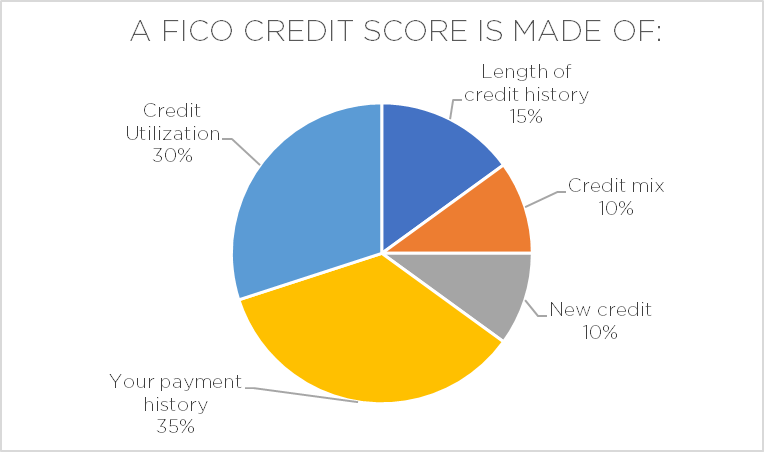
  • Paying on time (35%) – Late payments hurt. Use your bank or credit union’s auto-pay feature to avoid late payments.
  • Utilization (30%) – Keep credit card balances below 30% of your credit limit. This is why carrying around a “maxed out” credit card hurts your score. Although keeping or opening a second card with a zero balance can help your overall utilization ratio, the maxed-out card can still hurt your score. Credit reporting agencies count your per-card utilization as well as your overall credit utilization.
  • Length of credit history (15%) – Having “older” loans and credit accounts helps your score because it indicates experience with managing credit. Closing older accounts and opening new lines of credit can lower your score because these actions reduce your average credit age.
  • Variety of credit lines (10%) – Having a combination of both installment loans (e.g., car or student loans) and revolving credit (e.g., credit cards) helps your score somewhat. However, this only accounts for 10% of your score, so opening up additional credit lines just to round out the mix isn’t going to help your score very much (and if not managed well, might hurt your score).
  • Number of inquiries (10%) – Whenever you apply for new credit (personal loan, auto, student loan, credit card, mortgage, etc.), this results in the lender performing a credit check. These credit checks are recorded on your credit history and can affect your score for up to one year. They only account for 10% of credit score, so the best practice here is to not open too many new lines of credit within a 12 month period.

Which actions and behaviors affect your score the most?

Whether you are trying to repair an iffy credit history or you simply want to make sure your stellar credit score remains that way, here is a breakdown of the major things we should and shouldn’t do in order to have good credit:

DEFINITELY DO:

  • Check your credit score for free at sites like CreditSesame or CreditKarma. Checking your own credit score does not count as an inquiry and will not lower your score.
  • Pay the bills on time, every time. This action alone affects your credit score more than anything else.
  • Keep revolving balances (credit cards) below 30% of the borrowing limit. Aim for paying them off in full every month so you don’t carry a balance and pay interest on it every month. Loan balances have the second largest impact on your credit score.
  • If you miss payments and a loan is sold to a collection agent, pay this off as fast as you can, even if it means selling possessions or taking on an extra job. Collections items are like a heavy anchor on your score and constitute a financial emergency.

AVOID DOING:

  • Opening additional lines of credit if you don’t need them.
  • Opening several new lines of credit all at once.
  • Ignoring late notices. The next step is often a call or letter from a collection agent (and a nosedive for your credit score).
  • Paying someone to “repair” your credit. This is an additional cost for doing something you can do yourself.
  • Borrowing from your retirement plan at work (401(k), 403(b), etc.) to pay off debt balances. There are exceptions, but avoid this unless you are facing more serious consequences, such as filing bankruptcy.

Like any good financial habit, creating and maintaining a healthy credit history (and therefore, a healthy credit score) requires some knowledge and effort. Fortunately, the two criteria that carry the most weight – paying on time and limiting balances – are well within our control.

Why You Never (Ever) Want To Fall Behind On Federal Student Loan Payments

April 08, 2019

Few of us are ever on time for everything all the time. While it might be inconsiderate to be late for a meeting or pretentious to arrive fashionably late to a party, being late with bill payments can be expensive. If the late bill is a federal student loan payment, it can be even more than expensive; it can be frightening, physically disruptive, and even embarrassing. 

What can happen when you’re late with your student loan payment

Imagine getting mysteriously called into your employer’s human resources office one day. Fearing the worst, you are relieved when the HR exec tells you they aren’t firing you. They do, however, want to discuss with you an ominous letter they received from the federal Department of Education notifying them of wage garnishment procedures against you. Yikes!

I spoke with someone recently who called our financial coaching line distraught about his spouse’s federal student loans. Not only was she behind on payments, but she had reached the point that her wages were being garnished and their expected federal tax refund was replaced by a letter stating the refund had been recaptured to help repay the outstanding student loan balance. 

How did they get into such a pickle? Let’s take a closer look.

When you miss a student loan payment or two

When your payments are late by 30-90 days, here are some of the unpleasant things that can happen:

  • Late fees begin to stack up.
  • Your student loan processor begins to call you.
  • Your loan status changes to “delinquent.”
  • Your credit score begins to drop.
  • Interest rates on your credit cards may begin to rise.

You might be surprised to know…

The folks who process loan payments on behalf of the Department of Education (or ED, as it’s known, not DoE) are actually pretty friendly if you miss a payment or two. I know this from personal experience. Way back when, after I graduated with my bachelor’s degree, I knew my student loan payments were soon to commence, but I had somehow missed a communication or two and let the first couple of payments get by me. 

I received a pleasant phone call asking if I was aware of this situation. We had a quick chat to verify some details; I made a payment that day and then set up automatic bill pay with my bank so THAT wouldn’t happen again. 

Lesson learned: keep the lines of communication with your student loan processor open from the start. Add them to your smartphone contacts. Although delinquency is serious, it is usually easily fixed by catching up on your payments and keeping them caught up.

What if payments are more than you can afford right now?

Don’t stick your head in the sand and ignore – that’s the worst thing you can do. Student loan lenders will work with you – to an extent – but only if you communicate with them early on and stay in touch.

Several repayment options are available, and you may be able to switch to a less expensive monthly payment arrangement. This move will, however, result in additional interest payments and a longer payback period, making the cost of your education that much more expensive. However, this added bit of expense is better than the alternative. Restructure your budget; have a yard sale; take on a side gig… do whatever it takes. But keep making payments to avoid the next level, which is kind of a point of no return.

What if you miss several student loan payments?

Now things begin to get seriously serious. As in serious times two. And expensive. Seriously expensive. And possibly semi-permanent. If your student loan payments are late by more than 270 days (that’s about 9 months), your loan status changes from “delinquent” to “default.”  This is very, very bad. Here is the additional unpleasantness that awaits:

  • Your federal student loan balance(s) are now due in full, along with any accrued penalties, interest, fines, and collection agency charges. (I told you it was bad).
  • The federal government can (and often will) garnish up to 15% of your wages to repay the amount owed.
  • The IRS will keep your federal tax refund as well and apply it to your loan.
  • Your credit score is now very, very ugly. Getting new credit is going to be a challenge. And expensive. Maybe impossible.
  • Your student loan service may take you to court. This can also be very expensive.

Defaulting on a student loan is ugly business. You really don’t want to do this. You might blow off the cable or electric bill or even your landlord for a month or so, but don’t mess with student loan lenders. They can and will take some very serious steps to collect what is owed. After all, they have the power, might, and resources of the United States government behind them, and they are not afraid to use it.

Default can be undone, however

Defaulting on a federal student loan is extremely unpleasant, but it doesn’t have to be permanent. According to Federal Student Aid (an office of the U.S. Department of Education), there are two ways you can get out of default, other than immediately repaying the entire loan amount in full:

  1. Loan Rehabilitation: This is when you enter into an agreement with the lender to make a certain number of payments within their timeline, and if you do so, then your loan will no longer be in default. (you’ll have to continue the payments though to keep it that way)    
  2. Loan Consolidation: If you qualify, this is when you roll the defaulted loan in with one or more other federal loans and continue repaying them under an income-driven repayment plan. You must first make several payments on the defaulted loan to demonstrate that you’re serious, but then you may be able to combine it with another loan to get it out of default.

Loan rehabilitation takes a bit longer, but it can also be more flexible than loan consolidation. The Federal Student Aid website provides more information and detailed instructions on how to do both of these.

Does Your Teen Need To File A Tax Return?

February 19, 2019

My sixteen-year-old daughter recently received her very first W-2 from her part-time job as a hostess at a local eatery. As her father, I couldn’t have been prouder; watching my youngest achieve another right of passage on the way to adulthood – the right to file her federal income tax return. As a taxpayer, I sighed inwardly – she has no clue what potential tax torment awaits her in the future.

While not every parent shares my duality of fatherly pride and tax avoidance-induced angst, parents do sometimes ask me if their working teens are required to file a tax return. Great question! Let’s explore it further. One caveat, though; I’m going to limit my discussion to the filing of federal income tax returns. Requirements may vary from state to state, so check with your individual state taxing authority for those rules.

Who must file?

Fortunately, the IRS has an Interactive Tax Assistant (ITA) that can help your teen determine if s/he needs to file a tax return. Your teen will need the W-2 sent by the employer, and after answering what seems like an endless stream of questions, the ITA will state whether your part-time worker needs to file a tax return. In many cases, the ITA may tell you that there is no need to file a federal tax return, because your teen did not earn enough income or had sufficient income tax withheld by the employer. Caution!  Don’t stop at this step…

Don’t give away more than you must

The rules for who must file a federal income tax return are found in IRS Publication 501. Generally, if your single (aka unmarried) teen made less than $12,000 in earned income in 2018, the IRS will tell you there is no need to file a federal income tax return. However, if the teen’s employer withheld income taxes from paychecks, your teen likely qualifies for a tax refund and should file a tax return in order to receive the refund. Just because you aren’t required to file a return doesn’t mean you shouldn’t file one. In short, don’t lose your refund by not filing.

Take home more money now

According to the IRS, “…status as a full-time student doesn’t exempt you from federal income taxes.” However, your part-time working teen might qualify for an exemption from having income tax withheld from each paycheck. If your teen owed no taxes for the previous year (e.g., qualifies for a full refund) and your teen does not expect to owe taxes this year (e.g., same job, same pay, same hours), then s/he may be eligible to file a form W-4 with the employer and enter “Exempt” on line 7. This means no income taxes will be withheld from each paycheck. It also means no refund (or a smaller one) when filing income taxes next time, but isn’t it better to have that money now?

It’s never too early

Too early to save for retirement, that is. Having earned income, even part-time income, means your teen can also contribute to a Roth IRA. Why not take that “additional” exempt income that would otherwise be withheld for income taxes (see above) and invest those dollars in a Roth IRA? Your child begins to build not only some good savings habits, but also plants the seeds for a future tax-free nest egg that has many decades to grow and compound into a sizable fortune.


Will You Want Or Need To Work Past Age 65?

February 08, 2019

Many of us work with two kinds of coworkers – those who say they can’t wait to retire and those who swear they love their jobs so much they plan to die at their desks. I get the first group. Who doesn’t want to retire to a life of leisure without alarm clocks, meetings, conference calls, or commuting in traffic?

The second group, however, I view with a somewhat skeptical eye. Sure, some of us have dream jobs that we can’t wait to dive into every day and we would be very happy working in them until we are simply unable to do so. But when it comes to working past “normal” retirement age (let’s call it 65 since that is when Medicare kicks in for American workers), how many of us are going to work that long because we truly want to, and how many of us are masking the reality that we might actually need to work well into retirement age due to financial reasons?

Know your numbers

Even if you are unsure as to which of these two camps you may find yourself, a good first step for all of us is to periodically run a retirement income projection to estimate how much of our pre-retirement income we could potentially replace at retirement time. Knowing how much income we could potentially generate for ourselves in the future across a variety of potential retirement ages can help us plan not only for the retirement lifestyle we prefer, it can also help us plan for the possibility that life may hand us a giant bucket of lemons and force us to retire earlier than expected due to unforeseen events, such as a health issue or a late career downsizing.

If you work with a financial planner, ask him or her to give you an estimate of your future retirement income, or you can use the retirement estimator calculator to do it yourself. You will also want to get an update of your future Social Security retirement benefit amounts from the Social Security Administration at www.ssa.gov.

Employee engagement after 65

A major concern among both employers and workers is just how engaged we are likely to be in our work past age 65. Exactly what does it mean to be engaged on the job? According to an Aon Hewitt study, employee engagement describes the level of an employee’s psychological investment in their organization rather than simply showing up and going through the motions to collect a paycheck.

If you truly are engaged in your job, and you love what you do, where you do it, and with whom you do it with, then you are in your happy place career-wise and should certainly keep working as long as you wish. But what if someday you become that less-than-engaged worker, yet you aren’t ready or can’t yet afford to retire? What are your options then?

Attractive alternatives

You could try to hang on longer and maybe find a way to love your currently uninspiring position, but that seems like a disservice to both you and your employer. Instead, you could contemplate a late-career job change to something you do love that engages you more fully. This proposition is not as scary as it may seem. According to the New Careers for Older Workers study conducted by the American Institute for Economic Research (AIER), 82% of survey respondents not only made a successful career change after age 45, but many of them also received higher earnings.

As an alternative, you could also restructure your lifestyle to live on less. This way, you could successfully retire from a job where you’ve lost that lovin’ feeling without prematurely draining your retirement savings.

What Happens When You Inherit An IRA?

January 31, 2019

You’ve inherited an individual retirement account (IRA) – now what? Should you spend that money or save it for later? What are the consequences of either choice? Although there are several rules to follow regarding the method and timing of distributions from inherited IRAs, it is important to understand that distributions from inherited IRAs are not subject to the usual 10% penalty for distributions received before you reach age 59 ½. The IRS rules for distribution of inherited IRA funds are different depending upon several conditions:

  • Whether the IRA owner died before his or her beginning date for required minimum distributions (RMDs).
  • Your relationship with the deceased IRA owner (spousal or non-spousal)
  • Whether the inherited account is a traditional IRA or a Roth IRA

Spousal beneficiary of traditional IRA

If you inherited a traditional IRA from your spouse and were named the sole beneficiary, you may choose any of these options:

  • Own it. Treat the IRA as your own, even rolling it into an existing traditional IRA in your own name. Electing this option means the same rules and penalties apply to amounts withdrawn prior to you reaching age 59½. Assets will continue to grow tax-deferred.
  • Lifetime distributions. Open an inherited IRA (make sure it’s labeled “inherited”), transfer the inherited assets into it, and take annual distributions over your lifetime. Distributions need not begin immediately, but they must start no later than December 31 of the year in which your spouse would have turned 70 ½ or December 31 of the year following the year of death, whichever is later. If your spouse was age 70 ½ or older upon death, then distributions must begin no later than December 31 of the year following the year of death. These lifetime distributions are taxable, but they are not subject to a 10% penalty for early distribution if you are under age 59 ½.
  • Five year spend down. Open an inherited IRA, transfer the inherited assets into it, and take distributions of the full amount over a five year period. By the end of the fifth year, all inherited IRA assets must be distributed to you. These distributions are taxable, but they are not subject to a 10% penalty for early distribution if you are under age 59 ½.
  • Lump sum. Take a taxable lump sum distribution. As with the lifetime or five-year distribution options, a lump sum distribution to you is subject to income tax, but a 10% penalty for early distribution prior to age 59 ½ does not apply.

Non-spousal beneficiary of traditional IRA

If you are named as the beneficiary of an IRA from a parent, grandparent, sibling, aunt/uncle, friend, etc. (aka anyone you weren’t married to when they died) then the rules are different – you may not treat the inherited funds as your own. However, the other options available to a spouse are also available to a non-spouse. A non-spouse traditional IRA beneficiary may:

  • Open an inherited IRA in the deceased’s name, transfer the inherited assets into it, and take annual distributions over your lifetime. These distributions must begin no later than December 31 of the year following the account holder’s death. These lifetime distributions are taxable, but they are not subject to a 10% penalty for early distribution if you are under age 59 ½.
  • Instead, you may elect taxable distributions of the full amount over a five-year period without incurring a 10% penalty for distributions received prior to turning age 59 ½.
  • Finally, you could also take a taxable lump sum distribution immediately and without paying a 10% early withdrawal penalty if you’re under age 59 ½.

Spousal beneficiary of a Roth IRA

  • Treat the inherited Roth IRA as your own, including rolling it into a new or existing Roth IRA.
  • Elect lifetime tax-free distributions.
  • Elect tax-free distributions of the full amount over a five-year period. However, if the account is less than five years old when distributions occur, earnings will be taxable.
  • Take a lump sum distribution. However, if the Roth IRA was less than five years old at the time of the owner’s death, earnings are taxable when distributed.

Non-spousal beneficiary of a Roth IRA

With the exception of treating the inherited Roth IRA as your own (not an option in this instance), a non-spouse beneficiary of a Roth IRA has the same remaining options as does a spousal beneficiary:

  • Elect lifetime tax-free distributions.
  • Elect tax-free distributions of the full amount over a five-year period. However, if the account is less than five years old, earnings will be taxable.
  • Take a lump sum distribution. However, if the Roth IRA was less than five years old, earnings are taxable when distributed

Inheriting an IRA is, of course, a bittersweet occasion where we have to simultaneously deal with the physical and emotional loss of someone we care about and also face some critical financial decisions. For more information and details regarding this important topic, refer to IRS Publication 590-B, Distributions from Individual Retirement Arrangements (IRAs). You might also want to consult with a qualified financial or tax advisor for advice on your particular situation.

How To Make Sense Of All The Different Credit Scores

January 17, 2019

There was a time when your credit score was your credit score. It was one number, and the higher it was, the better your life was (at least from a borrowing perspective). Lately, you have probably noticed there is more to credit scores these days than just your FICO® score. Now we have VantageScore and even UltraFICO™ (whatever that is?). Let’s take a look at all of these to decide what you need to worry about (or not).

FICO®

In 1981, the Fair Isaac Corporation, FICO®, created the first credit risk score and quickly became the primary credit scoring company in the United States. Whenever we apply for credit, potential lenders want to know how likely we are to pay them back on time. Before FICO® scores came along as a standard way to measure credit risk, individual lenders more or less used their own criteria to determine whether or not to lend you money. (Yes, they made it up as they went along).

Now many lenders rely on your FICO® score instead, a three-digit number ranging from 350 to 850 (or 900 for some industries), with a higher score indicating better creditworthiness. Over time, many more credit risk models have evolved under the FICO® umbrella, so FICO® is more of a brand than an individual score these days.

VantageScore

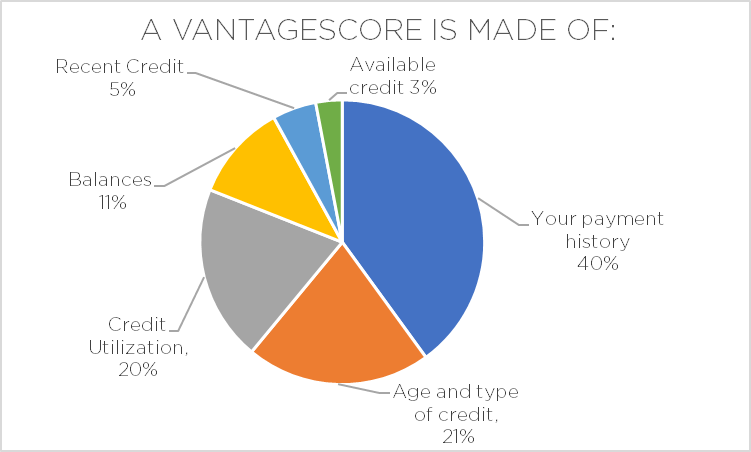
Equifax®, Experian®, and TransUnion®, the three major credit reporting agencies, combined forces to establish yet another credit scoring model, VantageScore. They kept the 350 – 850 scoring range, but how various credit behaviors are evaluated within the model varies somewhat from the FICO® method. For example, both methods evaluate things like late payments, utilization, length of credit history, etc., but they assign different levels of importance or weight to these criteria. The graphic below illustrates how VantageScore measurements differ from those of FICO®.

UltraFICO™

As the saying goes on TV infomercials, “But wait; there’s more!” Someone who is just starting out or starting over with building a positive credit history can find it challenging to obtain credit without first having had credit. Introducing UltraFICO™, a new offering from the folks at FICO, pioneers in the development of credit score analytics, that allows consumers to link their checking and savings accounts to their credit score.

Although checking and savings accounts are typically not included as part of your traditional credit score, demonstrating evidence of responsible financial behavior by keeping a positive bank balance and regularly paying bills can help build your UltraFICO™ score. Working jointly with Experian, one of the major credit scoring institutions, UltraFICO™ scores will initially be available (at the time of this writing) through a limited group of lenders as part of a pilot phase for consumers who may not have access to credit or who might be eligible for better credit terms.

This initial pilot phase is being used to fine-tune of the launch of this new scoring model. Following the pilot phase, the UltraFICO™ Score is expected to become more widely available. If you are interested in participating in this program and obtaining your own UltraFICO™ score, visit their website and complete a brief online form.

Why different scoring models?

As with all things in the marketplace, demand drives supply. In the world of lending, one size does not fit all, and different lenders across a variety of industries still prefer to evaluate potential borrowers according to their own models, so a variety of credit scoring models has evolved to cater to lender needs. Keep in mind, the credit scoring and reporting entities make money by selling scores to lenders, so they periodically offer something “new and improved” to help their lending customers make more informed decisions.

What does it mean for you?

While it can be confusing to figure out why your FICO® score is one number and your VantageScore is a different number, in the big scheme of things, the numbers themselves are not all that important. Yes, a higher score is better than a lower score, but the more critical measures of our financial wellbeing remain the same, regardless of credit scoring model:

  • Do we have enough extra cash on hand (emergency fund)?
  • Are we saving enough for retirement?
  • Do the bills get paid on time (no late payments)?
  • Are we using a strategy to pay off consumer debt quickly?

I still keep track of my credit scores, of course, mainly as a way to see if anything unusual might be going on. When it comes to focusing on specific numbers, though, I’m more concerned about meaningful values like blood pressure & cholesterol than I am about FICO® and VantageScore. In fact, the less I worry about those last two values, the better I do with the first.


2019: Making Changes To Fund My Expanding Bucket List

December 20, 2018

Editor’s note: As 2018 draws to a close and we launch 2019, I’ve asked each of our bloggers to reflect on their own personal goals, plans or thoughts on the past or upcoming year. Our hope is that you not only draw inspiration from our sharing over the coming weeks, but also that we are all able to feel more connected through our shared human experience and recognize that no matter where we are on our personal financial wellness journeys, that we all have similar hopes, dreams and struggles. Happy holidays! Here’s what Mark has to say:

As I get older, my new hobbies seem to get more and more expensive: Photography (the image for this post is actually my own work). Scuba Diving. Underwater photography. And the wife is eager for us to buy a camper and see America (as long as there is some scuba diving nearby, I’m all for it). Although my bucket list may seem unlimited, my income and household budget are not. Where to make changes to support these new interests?

Preparing for upcoming changes

While it is nice when life remains predictable and the budget remains fairly constant, reality is often different. Our lives are in motion, and change is inevitable. With the end of another year upon us, this notion has me pondering what changes are likely in store for us next.

Probably our biggest change is getting ready to downsize and declutter our home. With two of our three children more-or-less out of the nest (we hope), we have way too much space and too much stuff these days. Selling off most of our furnishings and other accumulated household debris should fetch a few dollars to help fund my hobbies. And moving to a smaller (and therefore less expensive) home will make a huge difference.

Now if I can just convince my wife to wait until the college bills are gone before we invest in that camper…

How To Earn More Interest On Your Emergency Savings

November 29, 2018

My wife and I were driving home from dinner not long ago and we were stopped at a traffic light. BAM! Someone hit the rear of our car, making our memorable evening out a little too memorable. No one was hurt, but the offending driver was a little slow to produce credible insurance proof, so I had my insurance company handle the repairs initially.

Since I like to keep my monthly premiums as low as possible, there went $1,000 out of our emergency fund for the deductible. A week later, someone backed into the side of my parked pickup truck and made a quick getaway, leaving me stuck with another insurance claim – and another $1,000 deductible out of my pocket. Ouch.

You probably keep some cash set aside for emergencies too, right? I hope you’ve squirreled away somewhere between three and six months of expenses into a savings account for those surprise expenses that life throws at us. Financial planners almost universally recommend this strategy as the preferred way to avoid taking on expensive credit card debt (or worse – payday loans).

Earning more on your emergency savings

Even though we know having cash on hand is the best way to handle these emergency expenses, the minuscule interest rates on savings accounts makes it difficult to watch all that cash just sit there and do practically nothing else for us in the meantime. Surely, there is a better way? Actually, there are several better ways to earn a few extra bucks on your extra (emergency) bucks. Let’s take a look at a few alternatives.

Credit unions & community banks

If you do your banking at one of the big commercial banks, you’re probably not earning much interest at all on your savings. For your emergency fund, look around for a credit union or small regional bank alternative in your area. Having worked in the credit union for several years, I admit to some bias here, but I also have plenty of facts to support my bias. For instance, as I am writing this, a well known large bank’s website currently shows interest rates on their savings accounts to be a whopping 0.01%. Yes, that’s one one-hundredth of one percent.

At that rate, you would have to keep $1,000 (one thousand) in your savings account for a whole twelve months to earn one single penny. My local credit union, on the other hand, pays 0.25% on their regular savings accounts and 0.30% on money market accounts. Still not that much to brag about, but significantly better – 25 times better! They also offer a special rate on youth savings accounts, paying a whopping 2.96% on balances up to $500!

The lesson here: shop around for specials. Sometimes community banks and credit unions are seeking additional deposit dollars (so they can make more loans) and will pay you pretty handsomely for the use of your money.

Online only banks

If you don’t mind doing your banking business online instead of face-to-face in a local brick & mortar building, the world of online banking (and their lower overhead costs) might be a good fit for you. Keeping your emergency funds just out of arm’s reach might also help you avoid raiding the piggy bank for non-emergencies.

A good place to shop around for online bank savings rates is www.bankrate.com. As I look there today, I see interest rates on savings accounts as high as 2.10%, with a minimum deposit as low as one dollar. CD rates are as high as 2.60%, but you must commit those dollars for at least one year to enjoy that rate. In any case, online banks are worth taking a closer look!

Roth IRAs

I am often asked if a Roth IRA makes sense as a type of emergency savings. My response to this question is both yes, and no.  As you may know, IRS rules do allow for early distributions from a Roth IRA as long as the amount you take out is not more than what you have already contributed (i.e., don’t touch the earnings). So, technically, yes you could tap into your Roth IRA to cover an emergency expense, but I don’t recommend using this as your primary emergency money.

Short term cash needs (emergencies) should come from liquid, short term cash, and you will find those funds in your savings account at the bank or credit union. Roth IRAs are for longer term needs, such as supporting you in retirement, and as such, these funds should be invested in longer-term things (stocks, bonds, mutual funds, etc.) that can grow at a rate better than what a savings account pays. As such, your Roth IRA is not suitable as an emergency fund – except maybe in this next instance.

Consider it as your “back-up” emergency fund

Suppose you already have three months of critical expenses covered by cash in your savings or money market account.  Then – and only then — you might consider your Roth IRA as a backup emergency fund for really big emergencies, such as an extended bout of unemployment or an expensive medical procedure with steep out-of-pocket charges.

Why I Hate Black Friday

November 19, 2018

I admit it. I am a huge fan of Dr. Suess’ How the Grinch Stole Christmas. The original animated classic from 1966 narrated by Boris Karloff, that is. It is truly one of my holiday favorites, along with Charles Dickens’ A Christmas Carol; specifically the 1999 TV movie version featuring actor Patrick Stewart as Ebenezer Scrooge. Yes, I do own them both on DVD, and they come out of their cases each year right about the same time I trot out my favorite pumpkin pie recipe for Thanksgiving.

♫♪♪ ♫♪ You’re a mean one… Mr. Grinch! ♪♫♪♫

Based on this introduction, you might get the idea that Christmas is not my favorite holiday. That’s not true. It’s not the holiday that I hate. It’s all the needless, crazed, (over) spending that takes place, not to mention all of the “noise, noise, noise noise” (advertising), to quote my holiday hero, Mr. Grinch. Nor am I anti-capitalist. I love capitalism. I just love it in a calmer, more controlled, responsible way.

So, why my disdain for Black Friday – the day after Thanksgiving; the Super Bowl of shopping days? Here are a few reasons:

  • Low inventory of “deals,” or sometimes only one at that great Black Friday price.
  • Retailers who mark stuff up just to mark it down.
  • All of the pushing, shoving, and generally rude shopper behavior.
  • You probably have the day off (unless you work retail). Why get up so darned early on your day off?  (Unless you are going fishing).
  • Perhaps most importantly – getting ensnared by the sales hype can become a budget buster!

People get so caught up in the momentum that budget discipline often goes out the window, credit balances soar, and the New Year is considerably less happy when those bills start showing up. Last year, for instance, Americans on average ran up more than $1,000 in additional credit card debt due to holiday shopping. Worse, almost one third of them estimated they would be still paying for the gifts they bought well in to May.

Bah. Humbug. 

So, what are some alternative things to do instead of shopping, getting trampled, stressed out, and blowing your budget before you’ve enjoyed that last leftover turkey sandwich?

  1. Do absolutely nothing. It’s Friday AND a holiday. Enjoy the time off. You’ve earned it. (I plan to be fishing that day).
  2. Ring a bell next to a kettle. Help serve some meals. Feel good by doing good.
  3. Go camping. Unless you live where it snows (make a snowman?). I live down South, and November is perfect camping weather!
  4. Get a massage. No stress there.
  5. Get a head start on next year’s budget/financial plan/insurance review, etc. You’ll have it out of the way and you can enjoy the rest of the holiday season without that little voice in your head nagging you about how much you’ve neglected your personal finances. A good place to start is by requesting a free copy of your credit report from annualcreditreport.com.

Make regifting great again

I’m not suggesting we alienate friends and family and do away with holiday gifts altogether. Let’s just put a little more thought and strategy into it. For example, there is a group of people in Ashland, Oregon, who celebrate with an “Abundance Swap,” bringing things they don’t want and exchanging them for stuff they do want or need. It’s an interesting and fun twist  on socially acceptable regifting. And why is there so much stigma about regifting; don’t we recycle everything else already? For more great alternative and fun gift ideas, check out BuyNothingChristmas.org.

This year, let’s take a break from the nonsense of Black Friday sales and Cyber Monday online deals (you are supposed to be working, anyway). In the end, we will all be much wealthier, healthier, and happier. Now who wants another slice of pumpkin pie?

The Thing That Retirees Regret The Most And How To Avoid It

November 08, 2018

It is said that no one on their death bed ever wished they had worked just a little longer. The same may not be said for U.S. retirees, however. Among average earners, Social Security payments are likely to make up more than half of their retirement income. The odds seem pretty good that more than a few of them wish they had worked a little longer – or at least waited longer before claiming their Social Security benefits.

Maturity and Social Security

As a financial planner, I spend much of my time talking with people about their concerns regarding retirement. One of my favorite questions to ask is, “At what age do you plan to claim your Social Security retirement benefit?” More often than not, they tell me, “As soon as I can get it,” which is age 62 (unless you are a widow or widower, then it can be as early as 60). While earlier may not always be better, they have plenty of company. As many as 57% of recent retirees chose to claim this benefit prior to full retirement age, locking themselves into a lifetime of 25%-30% smaller Social Security payments.

Claiming Social Security early may turn out to be one of your biggest regrets in retirement.

A recent study conducted by the National Bureau of Economic Research concluded that early Social Security claims are linked to increased likelihood of living in poverty in one’s old age. Why do so many people willingly limit themselves to a smaller Social Security payment, when they could be receiving so much more by waiting a few more years to claim? Oddly, only about 4% of retirees delay collecting Social Security beyond their full retirement age.

Why people retire when they do

The reality is people retire and claim Social Security retirement benefits for a variety of reasons. A combination of individual circumstances, knowledge, economic conditions, and even personal emotions influence our decisions about retirement. While some factors are largely uncontrollable, two of them – knowledge and emotion – are well within our ability to master.

Employers downsize, family members require care, or our own declining health forces us to leave behind the world of work, company benefits, and steady paychecks. Not having sufficient emergency savings or a backup plan for retirement would be regrettable when these unforeseen events happen.

What they regret

Our personal economics also can drive retirement decisions. Waiting too late to contribute to a retirement plan can lead us to regret working longer than we expected. Hoping our health holds out long enough to catch up (and really regretting things if our health falters), or carrying large amounts of debt for many years can drag down our ability to save and invest, leading to more retirement regret.

The combination of what we do or don’t know about retirement can shape our decisions. For example, everyone “knows” the typical retirement age is 65, right (or is it 62)? Not so fast. The Social Security retirement age for full unreduced benefits has changed. Depending upon your birth year, it may be as late as 67. Accordingly, the age at which you claim Social Security can make a significant difference in your retirement lifestyle.

Getting in touch with your emotions

As you might imagine, emotions (positive and negative) also play a role in making regret-free retirement decisions. For example, the mere fact that Social Security is available at age 62 (though reduced by 25%-30%) can influence how we feel about working at that point. Work may suddenly seem optional – we now have a guaranteed way to receive money without working, which appears to encourage earlier retirement.

As with most major decisions, though, letting our emotions be our primary retirement guide can lead to more regrets later. What if I do live to be 95 years old, like the folks at Livingto100.com recently suggested? Do I want to be stuck with the smallest possible Social Security check for 30 years?

No regrets

The emotional or “affective behavior” aspect of retirement decisions has and continues to be of great interest to me; so much so that I made it the subject of my doctoral dissertation regarding the influence of emotional states upon Social Security retirement decisions. My own research concluded that a combination of both emotion and education can have a measurable effect upon when people choose to make important retirement decisions.

What you can do to make the best decision for yourself

Fortunately, among the many factors that influence retirement, our knowledge and our emotions are two conditions over which we also have some individual levels of control. Among the many retirees whom I’ve counseled and guided over the years, those who eased most successfully into retirement:

  • Made time to be as informed as possible, reading up on their own, consulting with trusted financial professionals, or utilizing their financial wellness benefits at work. They sought knowledge.
  • Tuned into their emotions. I’m not going to get all touchy-feely, but it is critical to recognize when our feelings begin to overshadow our logic and lead us down decisional paths that may not be in our best long-term interest.

The American Psychological Association encourages people to consider their psychological portfolios along with their financial portfolios when preparing for retirement. My financial planner colleague, Doug Spencer, also recently wrote about ways to be mentally prepared for retirement which includes even more tips on how to fill your retirement with more memories and fewer regrets.

How To Escape A Financial House Of Horrors

October 30, 2018

Sometimes our finances become so scary they make us want to close our eyes and wish away all the monetary mayhem. Unfortunately, financial denial only makes things worse. Here are some ideas to help chase away those financial boogeymen for good.

When a financial nightmare becomes reality

I was speaking with an employee the other day who reminded me just how easily we can slip into serious financial trouble when we let a few things slide. In this case, what started out as seemingly good idea to consolidate some student loans a couple of years ago in exchange for a smaller monthly payment was later accompanied by creeping credit card debt, followed by some back taxes owed to the IRS, a short sale on the family home, child support payments slipping into arrears, and basically an ugly financial monster of debt, fees, late payments, low credit scores, and garnishments that became just too horrible to look at anymore.

Rather than face down these monetary monsters and escape the nightmare, the person became defensive and began to ignore the growing financial burden. Although he paid just enough to keep bill collector zombies at bay, he no longer had any idea of the balances owed, how much was being charged in interest, or when (if ever) he might be able to pay off these debts. He had become detached from financial reality, and who could blame him? He was trapped in a financial horror show.

Financial worries haunt us

Money worries in general are fairly common. According to the American Psychological Association’s (APA) annual Stress in America report, over one-third (34%) of adults are haunted by worries over unexpected expenses. One quarter (25%) of Americans feel stressed and tortured by the struggle just to make ends meet for essential expenses. While we cannot escape worrying about money from time to time, how we choose to react to financial stress can either help us or hurt us.

How you deal with it makes a difference

Some people manage stress by exercising, practicing yoga, or meditating. These are great ways to help us feel better and avoid letting stress overwhelm us to the point that we are unable to take action. Others turn to less healthy alternatives: smoking, alcohol or other forms of substance abuse, along with good old fashioned denial. Avoiding things that make us feel uneasy is a common and natural reaction, but not always a healthy one.

Denial doesn’t make the financial ghouls go away

Unfortunately, ignoring the financial boogeymen in our lives will not make the money problems go away and very likely will make them worse. How can you tell if you are only procrastinating versus denying your financial reality? Here are some warning signs:

  • Unopened bills and financial statements are piling up.
  • You consciously avoid thinking or talking about money.
  • You have no idea what your net worth might be.
  • You are afraid to check your credit score.
  • You blindly let your spouse handle all of the finances.

How to get rid of the financial issues that haunt you

Ultimately, financial stress is best resolved by eliminating the source of the stress. It’s time to face down those money demons and “G-Y-F-S-T!” – Get Your Financial Stuff Together. Some other ways to help you exorcise those pesky financial demons include:

  • Find a friend. This could be your spouse, significant other, family member, or someone else you trust. Talking things over can help you put things in perspective and take inventory of what you can do to turn things around. Plenty of professional help is available as well:
  • Create a plan. If you have several money monkeys on your back, don’t try to tackle all of them at the same time. Pick one to focus on for now, preferably the one that makes you most uncomfortable. Among the many things Mark Twain is famous for saying, his advice on eating frogs applies here (do it now, and start with the biggest one).
  • Grab some tools. Anyone who’s watched an episode of The Walking Dead knows not to take on a zombie bare handed. Technology makes it fairly easy these days to get free help with budgets, debt reduction calculators, retirement estimators, credit reports, credit scores, and more. Pencil, paper, and spreadsheets still work too.

Most importantly, keep at it. Once we are willing to shine a bright light on our financial monsters, they don’t look quite so scary and eventually you can make them go away forever.

Is It Time To Get Out Of The Stock Market?

October 25, 2018

We’ve all heard the advice to “buy and hold” when it comes to investing, but when is it time to “sell and let go?” Surely we aren’t expected to just keep on investing forever and never spend any of that money, right?

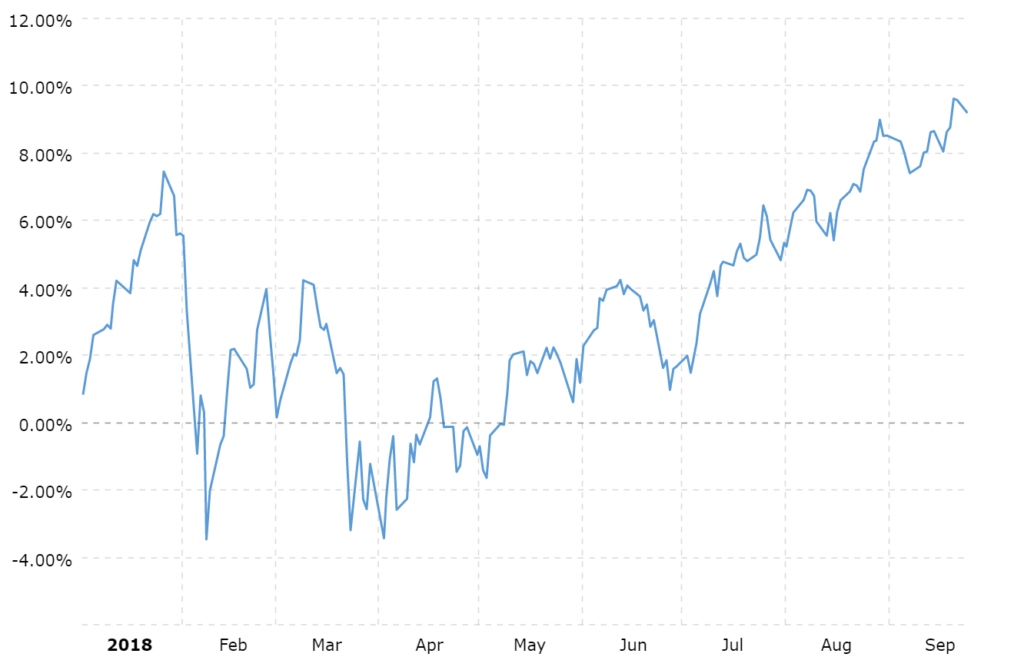
What about when the market begins to behave erratically like it has recently – down one day; up the next. Down. Down some more. Up a bit. Up, no wait, it’s down again. It’s enough to make some people motion sick and when that happens, they just want to get off the ride. Just as we wouldn’t hop out of a moving roller coaster the first time our stomach does a few flips, nor should we jump out of the stock market when the returns get bumpy. Let’s all keep our arms and legs inside the car and wait for it to arrive safely back at the platform before we move. But when is that, exactly? Are we there, yet?

Why do we react this way?

Whenever the stock market takes a dip or a swerve or a dive, and the news headlines begin screaming about how the market is “plummeting,” “crashing,” or some equally anxiety-inducing description, our inner lizard brain (a section called the amygdala) begins to twitch and send us into fight or flight mode. Since we can’t exactly fight the stock market, many of us turn to flight and run away by selling our stocks and embracing good old, dependable cash.

Which, logic dictates, is exactly the wrong thing to do. Remember the advice to “buy low and sell high?” Your amygdala just told you to run away from the perceived pain and sell low. Bad amygdala. Bad.

Our fight-or-flight response is quite natural, and it serves us well whenever we need to escape a burning building or react to an unexpected letter from the IRS. It is not so helpful when making investment decisions. Still, there must be a time when it is okay to get off the stock market roller coaster, right? Yes, yes there is.  Several in fact.

Who should sell

Eventually, for most of us anyway, we will need or want to sell those investment dollars because we need the cash so we can buy something important or support ourselves in our golden years. It might also be time to re-balance the mix of stocks, bonds, cash and whatever else you’ve selected for your portfolio because one or more of these categories has grown too heavy relative to the others. Also a good reason to sell (and reinvest).

All of the following are good reasons to take some money out of stocks, regardless of what the market is doing on any given day:

  • You are taking too much risk when considering your limited investment time frame and/or your physical and mental well-being. It is a good idea to periodically measure your risk tolerance and adjust your investments accordingly.
  • You will need this money soon, such as within the next 3-5 years. This might be a down payment on your future house or vacation home, college tuition bills, etc. Whatever the purpose, make sure it is a goal that you already had in place and have been investing toward for several years already. Start moving these funds into cash (CDs or money market accounts) so the dollars will be there when you need them.
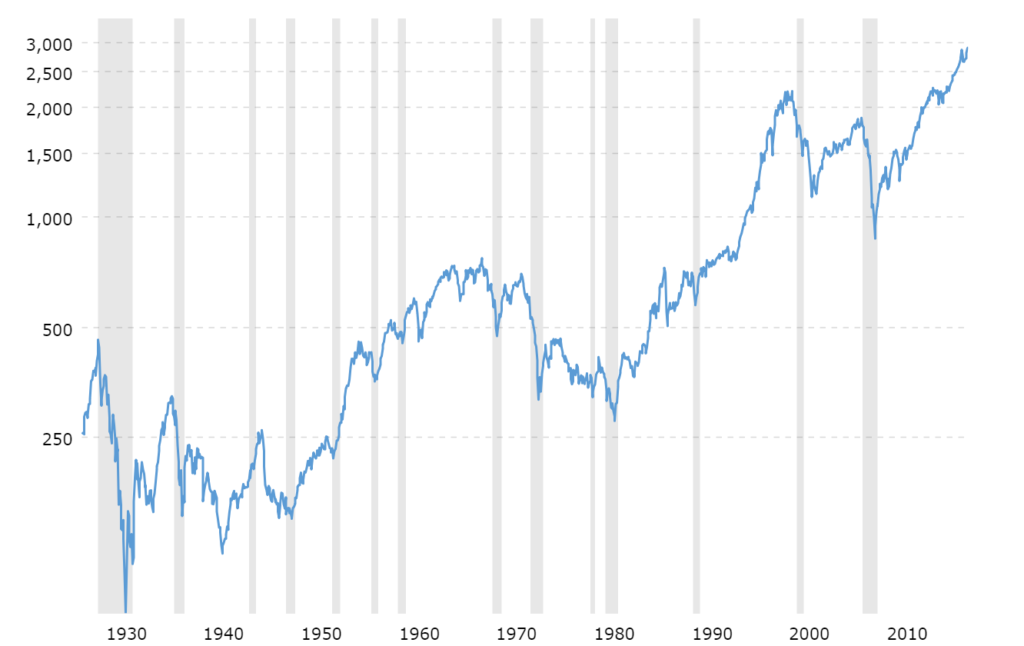
  • You are trying to make up for lost time. Sometimes we get a late start with saving and investing for our goals. The temptation is to “bet it all” and invest aggressively in stocks in the hopes of hitting an economic home run and earning 25% on our investments like we recently enjoyed during the 2017 stock market. This may be tempting in theory, but in practice it can be a lousy idea. Remember the 2008 stock market? Down 33.8%. Plummeted. Crashed. Burned. Could you live with that kind of a drop in the short run? Me, neither. Better to re-balance to a more reasonable mix of stocks, bonds, and cash and start aggressively saving instead. Shovel as much money as you can into your retirement plan at work, your IRA, and your spouse’s IRA. As one of my CPA friends is fond of saying when asked how much to save for retirement, “Save until it starts to hurt, then save a little more.”

How to feel healthier (and wealthier) when the market does crash. And it will.

Instead of using market crisis headlines as a reason to fret about our investment performance and beat ourselves up over allegedly bad decisions, we could decide to use this energy as an opportunity to review why we made those investments in the first place (comfortable or early retirement, putting kids through college, etc.). Have any of those reasons for investing changed? Are these dollars we are going to need in the next five years or is their intended use still many years in the future?

If nothing substantial about your life or financial situation has changed, the best course of action is nothing. As in do nothing. Don’t move. Don’t change. Keep your investments right where they are and tell your twitchy amygdala to calm the <bleep> down.

Actually, there are some things we should do when doubt begins to creep into our minds regarding our investments:

  • Breathe.
  • Relax.
  • Remind ourselves that this is what buying low (and selling high later) feels like.
  • Turn off the news for a while. Maybe a long while.
  • Increase your retirement plan contribution at work by another 1%. (This is what buying low feels like.)

We can’t control what the market does, but we can control what we choose to do. And the worst thing you can do when it starts to go down is get out, unless you shouldn’t have been in there in the first place.

Figuring Out How Long Your Retirement Will Last

October 24, 2018

We’ve all probably seen those commercials that ask us, “What’s your number?” They mean, of course, how much money will you need to save before you can retire. There are several ways to answer that question (we prefer to consider the question, “How much retirement income can you generate?), but I often get another question when I talk with people about retirement: “How long will my money last?”

The answer depends on your lifestyle and longevity. Stated another way, “How long will your retirement last?” Retirement is sometimes described as a really long unpaid vacation. Although we usually know how long a two week vacation is going to last, predicting the length of retirement is not so obvious.

How long do I have, Doc?

Fortunately, there are some tools to help us figure that out. Just as knowing how many vacation days we have helps us budget for that next trip, so too does a better understanding of our own longevity help with retirement and related plans. As you have probably heard, Americans as a group are living longer than they did 40 years ago. That means more retirement time in general, but what does it mean for us individually?

According to the Society of Actuaries (SOA), among people in their middle fifties, 1 in 2 women and 1 in 3 men can expect to celebrate a 90th birthday. In addition to considering how long your grandparents and parents lived, you can also use modern technology to zero in on your own life expectancy. Here are two calculators that make this task easier than you might think:

  • SOA Longevity Illustrator – answer just four questions (age, gender, smoking, general health) to see your probabilities for living to various ages.
  • Living to 100 – This calculator asks quite a few more detailed health and lifestyle questions, and it helps if you’ve been to the doctor recently and have a fresh copy of your cholesterol numbers and blood pressure readings handy.

Running my own numbers

It just so happens I recently had a medical checkup, so I ran both calculators for myself to see what they had to say regarding my fate. I was surprised (somewhat disturbingly) to see that Livingto100.com projected my life expectancy all the way out to 95 years! I’m healthy, but certainly no athlete (hello, dad bod), and there is some history of heart disease among my family members (but not me – not yet). I also don’t smoke, which is a huge health asset, in addition to saving me a bundle of cash.

The SOA’s longevity illustrator provides a more general result, showing the probability of living a specified number of additional years from today. Due to the limited number of variables – it only asked 4 questions – I expected the outcome to be a bit more pessimistic, and I was right. Even if I assumed the option for “excellent” health, the longevity illustrator gave me a better than average chance of seeing age 85 (66%), a less than average probability of celebrating age 90 (44%) and a gloomier 1-in-4 chance of reaching age 95 (25%).

Why the odds matter

Taken together, one calculator tells me that a long life out to age 95 is possible (www.livingto100.com), and the other calculator (www.longevityillustrator.org) tells me the likelihood that I’ll reach that 95th birthday, along with probabilities for all the other ages along the way. As a rather old English saying reminds us, “There are three kinds of falsehoods: lies, damned lies, and statistics.”

How I’m planning for a longer retirement

While no calculator or crystal ball can tell me exactly how long I may be around, these probabilities do give me a track to run on so I know what my trade-offs are as I make various financial decisions. For example, given the possibility and significant probability that I may be facing a very long retirement, I’ve decided that my retirement goals include the following:

  • Contribute to my 401(k) plan at work to the maximum annual IRS limit.
  • Work as long as I enjoy what I’m doing and physically can; I likely will need those additional years of 401(k) contributions.
  • Delay Social Security to age 70 and maximize this payment.
  • Pay off all my debts – including our mortgage – before I retire.
  • Consider converting some of my retirement nest egg to an income annuity as an additional guaranteed lifetime income supplement to my Social Security to make sure basic living expenses are more or less met no matter what.
  • Consider a reverse mortgage line of credit as a financial lifeboat if long term care or other unexpected and severe expenses begin to prematurely drain my retirement savings.

When the numbers show a shorter retirement

Of course, if my projections were not so long lived, I would focus on spending more early on, not working quite so long, cashing in Social Security a few years sooner, and not worrying too much about buying an annuity. These are highly personal choices, and your priorities are likely not the same as someone else, which makes this a good conversation to have with a financial planner.

If you want to keep your retirement goals really simple: save, pay off debt, and invest as if you will be that 90-something with a four-alarm flaming birthday cake. Your future self will thank you if you live that long and if not, your heirs and/or a beloved charity will thank you for the generous financial legacy you leave behind.

However, if your planning efforts demand more precision, use the calculators to dial in your own probabilities. Keep in mind, no calculator is perfect, and medical science is improving all the time. You might want to keep a little something in reserve so you can still enjoy that 90-somethingth birthday celebration.

How To Know If You’re Really Saving Enough For Retirement Based On Your Situation

October 09, 2018

Ever wonder if that 6.2% of each paycheck (or so) that you are socking away into your 401(k) at work is really going to be enough to help you retire comfortable someday? That’s roughly the average amount working Americans set aside in their employer sponsored retirement plans but is it realistic? Will those 401(k) dollars cover your future income needs when you are old and Social Security and your own savings are all you have?

This is one of the more common questions we get as financial planners, and there’s not a straight “yes” or “no” answer – we are the ones who will respond with that annoying, “it depends,” answer when asked. Rather than annoy you further, let’s explore some ideas that might help you see if your efforts are on track and what you can do about it if not.

Who saves what?

First, let’s consider what everyone else is doing – we all like to know where we stand against our peers, no? I ran across a rather disturbing headline lately claiming that approximately one third of Americans have saved less than $5,000 for retirement. This gloomy information comes to us from a Northwestern Mutual 2018 study that also found around one-in-five of us have nothing saved yet for retirement. Depressing. But what does this information mean, really?

When you consider the entire working population, that includes the youngest end of the workforce too, many of whom are busy paying off student loans and racking up consumer debt, so of course they aren’t saving much (if anything) for retirement just yet. I know, because I talk with quite a few of them on a daily basis and help them turn that statistic around.

The National Institute for Retirement Security also backs me up on this observation, citing their own research showing 66% of the Millennial generation has nothing saved for retirement, and 95% of this group are not yet on track with retirement savings. So when you consider that, then it makes sense that the overall statistic seems dire.

Older = wiser (and save-ier?)

I pondered this further and wondered if things get better as we get older, more experienced at life in general, and (hopefully) earn more money as our careers progress. Logically that makes sense, but my own experience reminds me that logic and human behavior are not always closely correlated. A study from the Economic Policy Institute does support the notion that retirement savings are noticeably higher after age 31 and generally increase as we approach retirement age. However, this same study also suggests retirement savings rates across the board are lower than they should be.

How much IS enough?

A common and helpful rule-of-thumb suggested by many financial planners is a 70%-80% income replacement ratio is the right amount to save. If you can retire with enough income from both Social Security and your retirement savings to replace between 70% and 80% of your pre-retirement before-tax income, you are likely on track with your retirement savings. People with lower incomes or considerable amounts of debt when entering retirement may need a higher ratio of 90% or even 100%. Those with more frugal lifestyles, greater savings, higher working incomes or less (no) debt might find a 60% income replacement ratio works just fine.

The tricky part is estimating your potential income so far out in the future. Fortunately, several handy online calculators are available. Here at Financial Finesse, we are rather fond of our Retirement Estimator Calculator. Similar retirement income calculators are available online as well, such as these:

Taking your next steps

If you find your savings efforts are on track, awesome! Keep doing what you are doing.

But what if there is a gap? What can you do beyond the obvious (and highly recommended) moves of spending less, saving (or earning) more money, or planning to work longer? Based on data and observations compiled within Prudential’s 2018 Retirement Preparedness Survey, an important step is finding ways to become more mindful of and focused upon our controllable financial behaviors, such as:

  • Becoming more knowledgeable about investments and how they work. Understanding market dynamics can not only help us make better investment decisions, but we can also avoid getting panicky and making a wrong move when investment markets become uncertain.
  • Being willing to take reasonable investment risks. While keeping your money out of the stock market altogether may seem like a safe bet, inflation then becomes your enemy and robs you of purchasing power as the cost of living outpaces your modest investment earnings. Asset allocation, on the other hand, becomes your friend as you spread the investment risk among a mix of cash, bonds, and stocks.
  • Consider working with a financial planner. A financial professional who focuses on you first can help you get and stay on track. Ideally, your employer offers access to a planner through a workplace financial wellness benefit, but if not, you can always find a planner on your own.

Making a plan is most of the battle

Wherever you are on your retirement preparedness path, having a clear path to follow is key. As our own Financial Finesse Think Tank’s 2017 Year in Review report concluded, people who commit to making repeated and positive financial changes over time tend to be more confident, twice as likely to be on track for retirement, and half as likely to suffer from unmanageable financial stress. Any time is a good time to check on your retirement planning progress and take your next step.


Worried About A Market Bubble? Here’s What To Do

October 04, 2018

When market returns have been positive for a while (like the reasonable, respectable year-to-date return just north of 8% on the S&P500 as of 9/24/2018 shown below), I’ve noticed that not too many people are complaining about earning “only” 4% back in mid-June (or 1.5% at the end of June – yikes!).

Instead, we stop worrying about not making money (when the markets are down or sideways) and we begin to worry about losing the gains we have made. I’ve had more than a few people ask me lately if the next stock market “bubble” is here. It seems we are never quite satisfied unless we can worry about something, even when things are going well.

Source: https://www.macrotrends.net/2490/sp-500-ytd-performance, accessed 09/25/18

Loss aversion

Psychologists and behavioral finance specialists have a term for this sinking feeling: loss aversion. When our minds begin to flirt with loss aversion, our thoughts and discussions focus on words like “bubbles” and we begin to deliberate over the various negative outcomes that could happen (but haven’t) and what we should do about them.

Mostly we worry. Sometimes we panic. The reactive lizard portion of our brains then kicks in and we make bad financial decisions (like moving 100% of our investments to cash). Why? Because our reference point has shifted – we don’t want to “lose” that additional 4% we made from June to September.

There’s just no way to know

While it can feel right to protect ourselves from these potential losses, it is almost always the wrong move to make. Why? The easy answer is, none of us has a crystal ball. Not me. Not you. Not Warren Buffett. No one. Looking back at the stock performance chart, which way will the line move next? No one knows. It is simply unknowable. The market giveth, and the market taketh away. But in the long run, the market generally giveth, does it not?

I’m not always so sure about that, either, but history is a pretty good indicator. Let’s go all the way back to 1926 and look at what arguably represents a (long) lifetime of investing. Looking at this next chart, there have certainly been some lengthy periods where investing in the stock market surely was not much fun. The mid-sixties through the mid-eighties come to mind; as does the so-called “lost decade” between 1998 and 2008. Ten or more years can be a long time to invest and feel like you might have been better off stuffing cash into your mattress.

Source: https://www.macrotrends.net/2324/sp-500-historical-chart-data, accessed 09/25/2018

What’s the alternative?

Despite some ugly short term performance (remember, stock investing is a long term game), stocks are still the best producing asset around. Better than bonds. Better than real estate. And yes, better than gold. (Don’t get me started on cryptocurrencies). However, I wouldn’t suggest keeping all of my money in stocks, either. When those inevitable dips do take place, those other asset classes (bonds, cash, real estate, etc.) are exactly the performance buffers you will need to offset the temporary stock dips.

How to manage stock risk

If the mantra for real estate is location, location, location, for investing it is diversify, diversity, diversity. Timing the market doesn’t work. Even the experts fail at that strategy. A successful investment approach is also generally a dull, boring approach:

  • Spread your money across different investment types – stocks, bonds, some cash, and even real estate if you are so inclined. Asset allocation is your friend.
  • Measure your risk tolerance from time to time and rebalance only when necessary.
  • Be very, very patient.
  • Ride out the next stock market dip; your (wealthier) future self will thank you.

When all else fails, do this

You’ve done it. You took steps to get in touch with your individual tolerance for risk, diversified your investments accordingly, and promised yourself to leave your investments alone and let them do their work for you. However, the news, noise, and chatter about the latest market “bubble,” “crash,” or “nosedive” is causing the inner recesses of your brain to twitch and second guess yourself. You really feel like you should be doing something – anything – because doing nothing feels like the wrong thing to do.

I couldn’t agree more. Doing nothing can feel like helplessness. When the market gets frothy and investors (including me) get nervous, here’s what I do:

  • Turn off the news (radio, TV, Internet, smartphone – all of it).
  • Go for a run (or a walk on the beach).
  • Take my sweetie out to dinner.
  • Paddle my kayak (or standup paddle board).
  • Go fishing.
  • Keep investing.

You and I can’t change the financial markets. They are going to do what they are supposed to do. We can choose to change how we react to them, however.